In this guide
- Is the sediment the problem?
- Total phosphorus and releasable phosphorus
- The four major release mechanisms
- Iron, sulfur, and the ability to bind phosphorus again
- Establishing the importance of internal loading
- What the main treatments change
- Treatment timing, durability, and adaptive management
- Applying the evidence to a small urban lake
- References & resources
01Is the sediment the problem?
Two lakes can report the same total phosphorus and need very different remedies. In one, phosphorus arrives with storm flow; in the other, watershed improvements have reduced those inputs, but sediment accumulated over decades continues to supply the water every summer. That return of phosphorus from sediment to water is internal loading, and it can sustain algae blooms long after the original pollution source has been reduced.
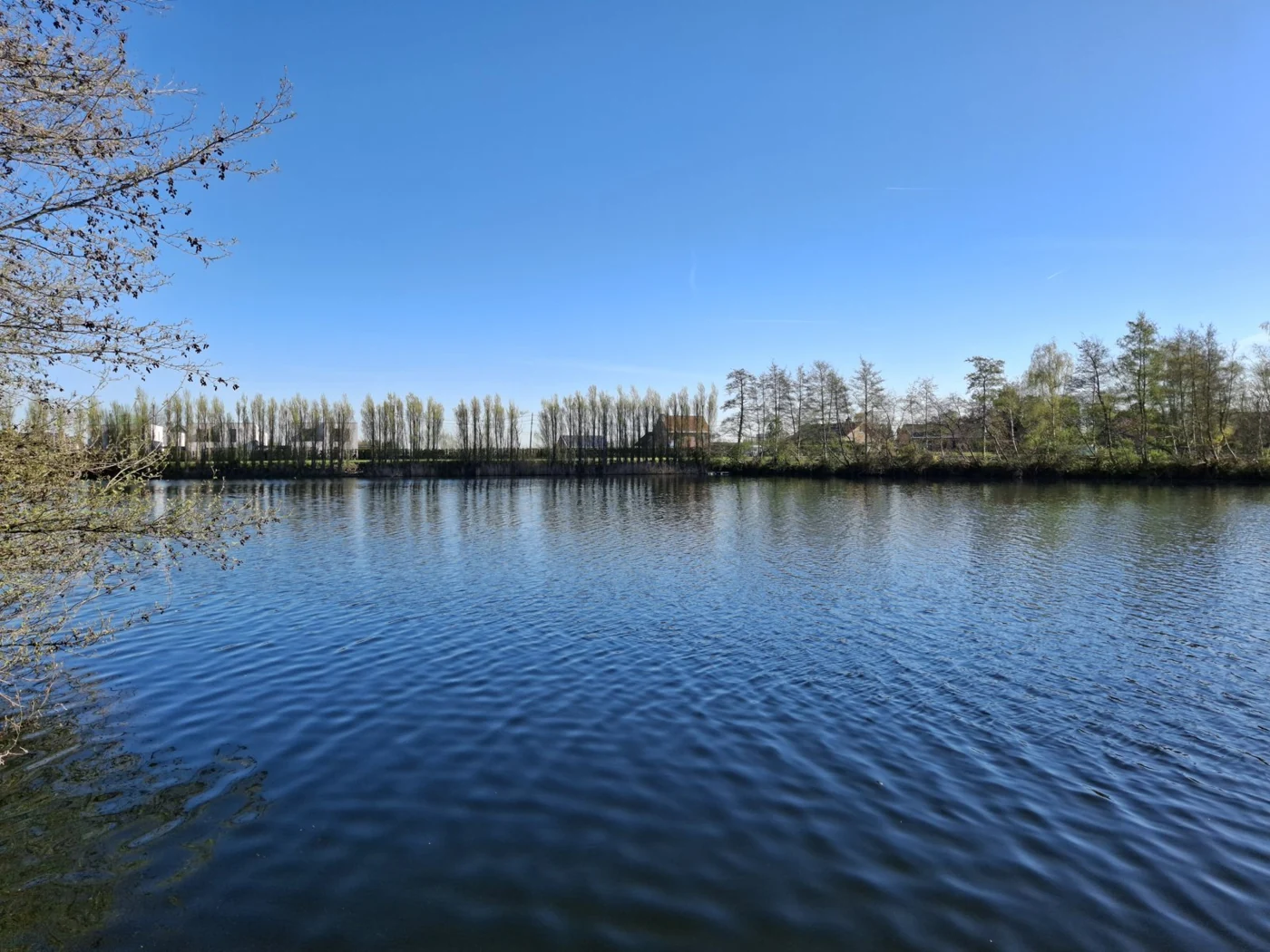
The distinction starts to emerge in the timing. Phosphorus that rises after tributary flow suggests a different investigation from phosphorus accumulating near the bottom through a dry, stratified summer. In shallow lakes, hot calm weather, overnight oxygen loss, and wind disturbance can connect sediment directly with the water where algae grow. We're interested in those differences because they determine which source a treatment actually needs to control.
The distinction changes the treatment. A phosphorus binder applied to the lake bottom may do little for an untreated inflow. Watershed improvements may take longer to improve summer water quality if a large internal source remains active. The relevant question is how much each source contributes during the period when water quality needs to improve.
Sediment phosphorus is a particular focus of our work at ENV. The useful part of combining a core, a depth profile, and an inflow record is seeing how they explain one another: whether the sediment releases the phosphorus accumulating below the thermocline, and whether that phosphorus reaches the growing zone when blooms develop. A mismatch is worth investigating. It can reveal an overlooked inflow, an unsampled release area, or a mechanism the original treatment wasn't designed to address.
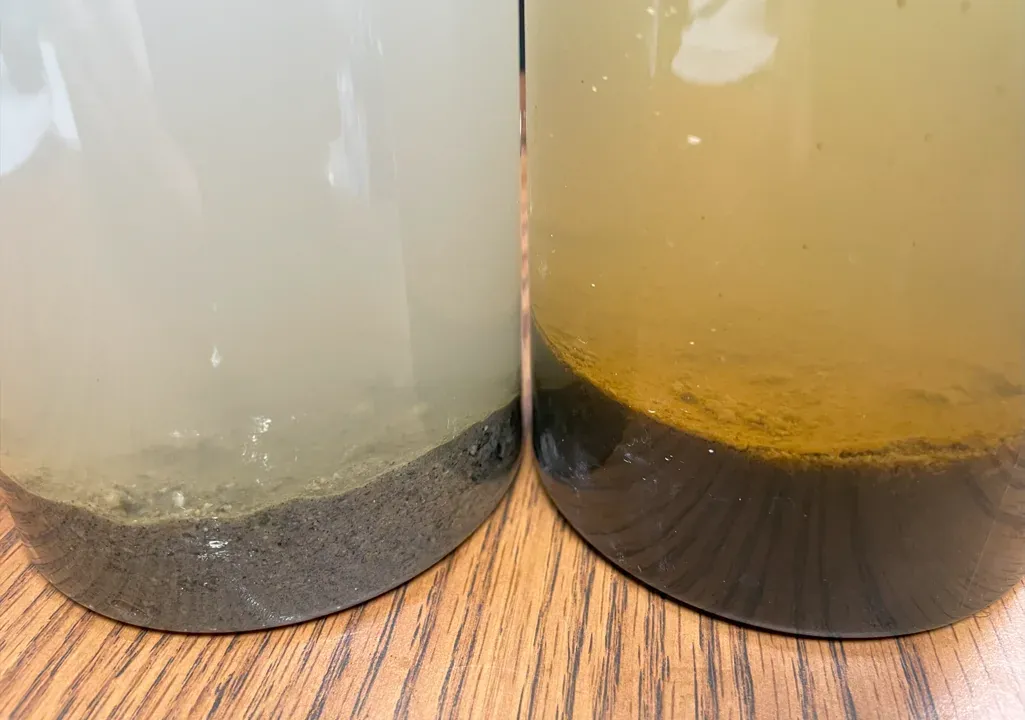
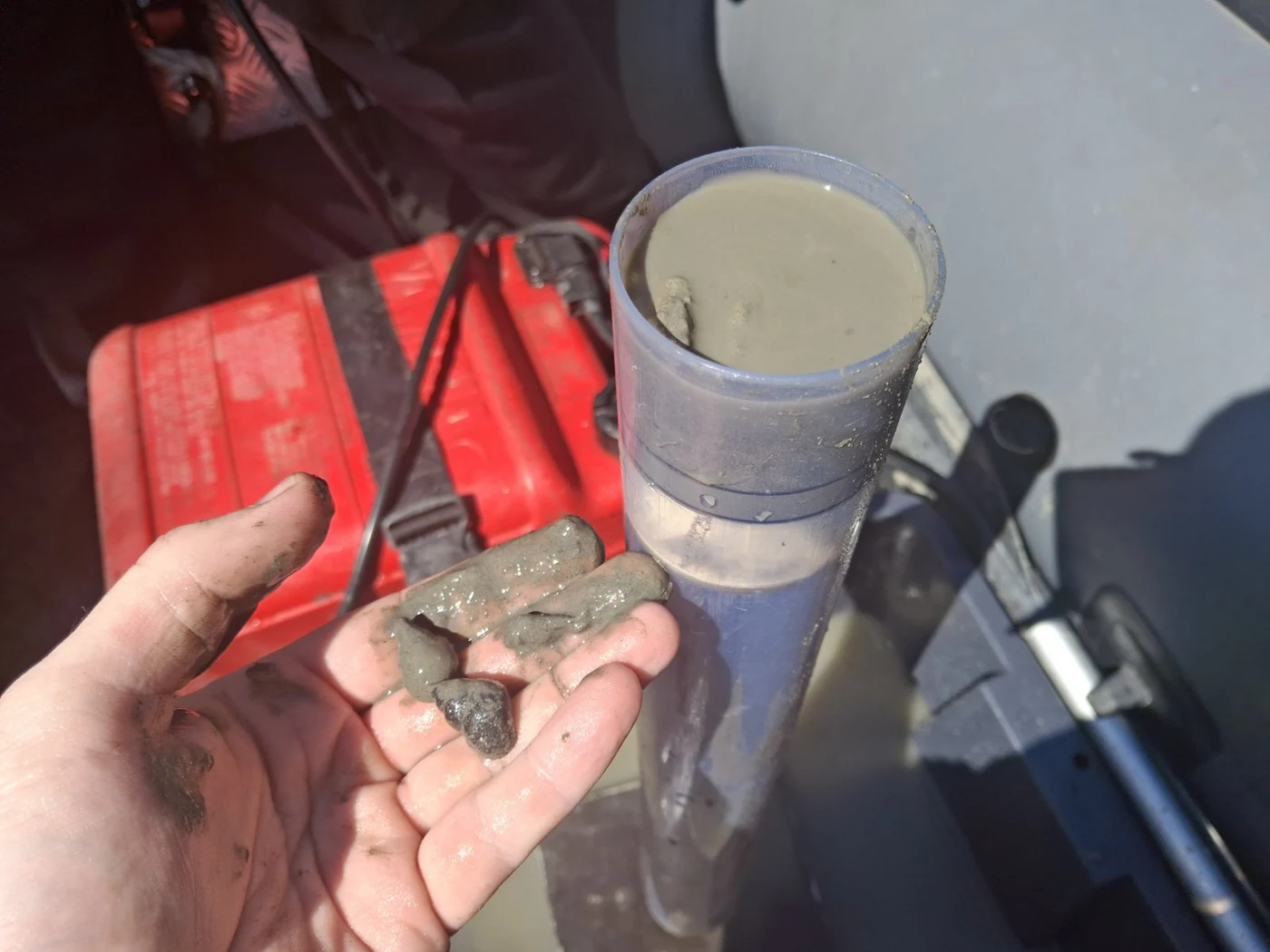
Sediment appearance is useful field evidence when it's read alongside chemistry. An experienced lake sediment specialist can estimate phosphorus releasability from the sediment's color, texture, organic content, and density, together with the depth, stratification, and bloom history of the lake or reservoir. That gives a qualitative picture of release risk before more expensive laboratory analysis is performed. The assessment has to be made immediately upon collection, because color and texture change as the sediment is exposed to air. The samples can then be refrigerated for laboratory analysis with minimal effect on the phosphorus forms and results.
Across the sediments ENV has assessed, the organic-rich, low-density end of the range has been more informative about releasable phosphorus than total phosphorus alone. That helps us choose representative sampling areas; release testing then establishes how those materials behave under the lake's oxygen, pH, and temperature conditions.
Why the timing of phosphorus release matters
Phosphorus arriving with winter runoff and phosphorus released from warm sediment in summer can produce different biological responses even when their annual masses are similar. Light, temperature, residence time, and the depth receiving the nutrient determine how much of that supply becomes available during a bloom. Annual averages can conceal a large seasonal internal load. [1]
The source question also includes location. Organic-rich depositional areas may have a large phosphorus inventory, while shallower sediment has more direct contact with the illuminated water where algae grow. We evaluate the release mechanism and the route to the growing zone together; the deepest or darkest sediment isn't automatically the most important treatment area.
Recovery can be slow even after watershed work succeeds. Jeppesen and colleagues reviewed 35 long-term lake studies and found that internal loading delayed recovery, with a new total-phosphorus equilibrium reached after roughly 10 – 15 years in most lakes. That history is one reason to investigate the sediment while protecting the gains already made in the watershed. [12]
Talk with us about when your blooms and bottom-water changes occur →
02Total phosphorus and releasable phosphorus
Total sediment phosphorus combines several pools that behave differently when the lake changes. Phosphorus bound to iron can be released as that iron is reduced, while phosphorus in decomposing organic matter becomes available more slowly. Phosphorus bound to aluminum, calcium, or lanthanum, or held in residual forms, is largely retained through the same conditions. Total phosphorus therefore tells us how much phosphorus the sediment contains, not how much will be released.
Total phosphorus is a poor measure of release potential for that reason. One sediment can have a high total that is mostly calcium, lanthanum, aluminum, or residual phosphorus and release very little. Another can have a modest total that is almost all iron-bound and organic phosphorus and supply a substantial internal load. Treating the two as equivalent can lead to an unnecessarily large treatment in one area and insufficient control in another.
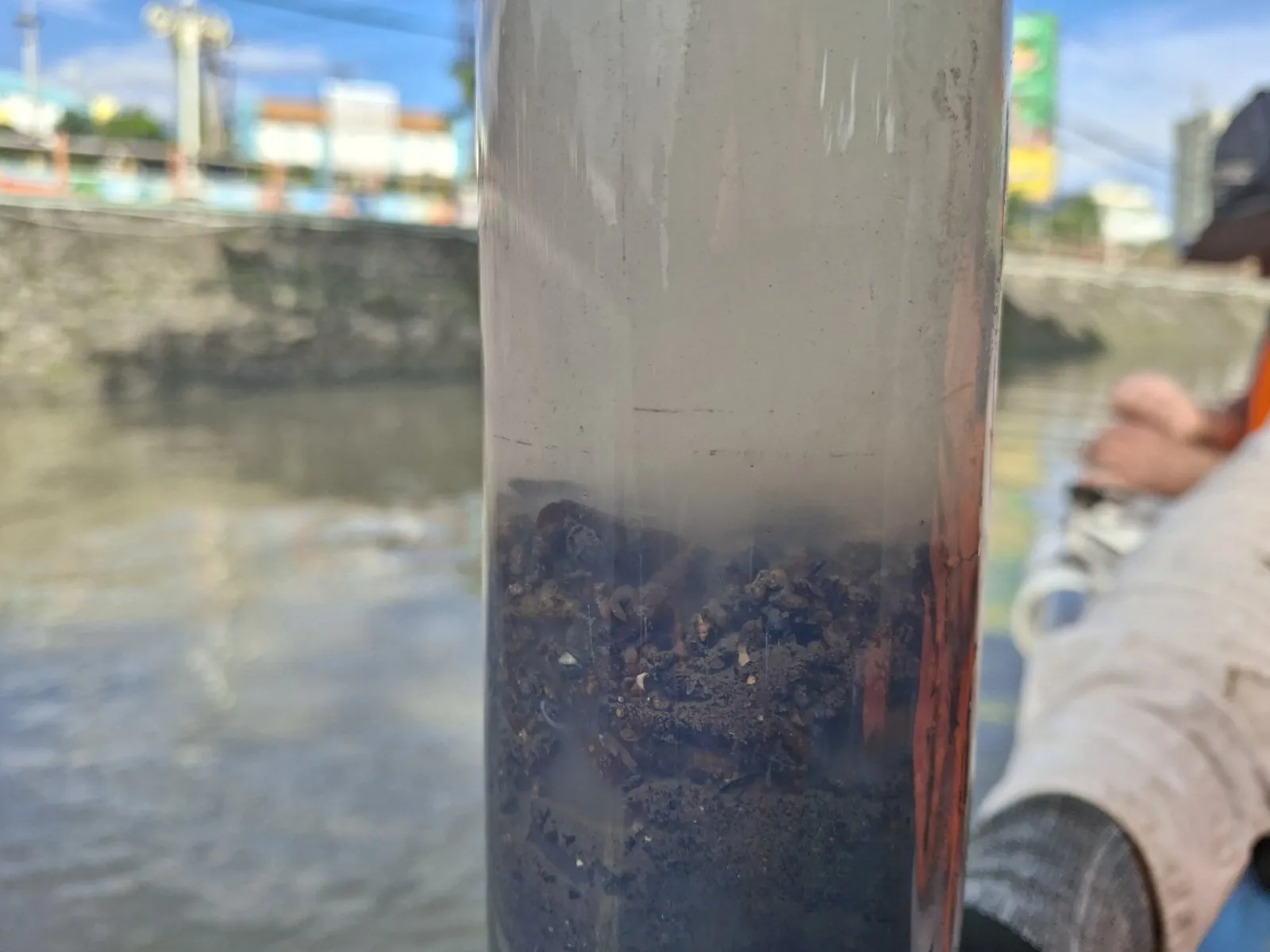
Intact-core incubations provide a different type of evidence. They preserve the sediment–water interface and measure changes in the overlying water under specified conditions. Comparing conditions can help establish whether oxygen loss, high pH, or another process increases release. Disturbed samples and intact cores answer different questions, and laboratory results still need to be interpreted against the lake's temperature, chemistry, and physical disturbance.
When a sediment analysis and an intact-core incubation disagree, we don't average the results and move on. A large chemically extractable pool with little measured release may be protected by the conditions in the incubation; a modest pool with sustained release may be continually replenished from organic matter. Connecting those results with the lake's seasonal behavior is how we distinguish a laboratory number from a source worth treating.
What sediment phosphorus fractions can reveal
Fractionation separates phosphorus into groups using successive chemical extractions. Those groups are operational definitions, not a perfect inventory of individual minerals, and the extraction method matters when results from different laboratories or studies are compared. We report six fractions, listed below in order of how readily they are released. [2]
| Fraction | What it represents | Release potential |
|---|---|---|
| Labile or loosely bound P | Phosphate held loosely in porewater and on particle surfaces | Released rapidly. Usually absent from an analysis; a high value means the sediment is releasing phosphorus even under oxic conditions. |
| Iron-bound P | Phosphate adsorbed to iron oxides | Released rapidly when the sediment becomes anoxic, and the large majority of this fraction can be released. |
| Organic P | Phosphorus in dead algae, aquatic plants, and other organic matter | Released slowly as organic matter decomposes, generally only ~50 – 75% of the fraction. |
| Aluminum-bound P | Phosphate adsorbed to natural or added aluminum hydroxide (extracted with sodium hydroxide) | Released only at high pH, about 9 and above. |
| Calcium phosphate minerals or rhabdophane (lanthanum phosphate) | Crystalline compounds, extracted together with hydrochloric acid | Calcium phosphate releases a minor amount in highly organic-rich sediment; rhabdophane is not released. |
| Residual P | Highly complexed phosphorus, typically in highly decomposed organic matter, plus some very stable minerals | Not released under lake conditions. Extraction requires a strong acid and a powerful oxidizer. |
Fractions are method-dependent. ENV combines them with sediment properties and release testing rather than adding selected fractions into a universal treatment dose. [3]
Labile phosphorus deserves particular attention because it is almost always absent. Most sediment is oxidized during sampling, shipping, and laboratory analysis, and the iron oxides that form bind the loosely bound phosphate. A high labile fraction therefore indicates that the iron is already saturated and can't bind additional phosphate.
Iron and aluminum carry most of the phosphorus binding that responds to lake conditions. Manganese has minimal influence on sediment phosphorus cycling, because its affinity for phosphate is low and its concentration is low relative to iron. Magnesium can play a role, but magnesium phosphates are less stable and less common than calcium phosphates and are analytically difficult to separate from them, so they're reported with the calcium fraction.
Phosphorus fractions in common sediment types
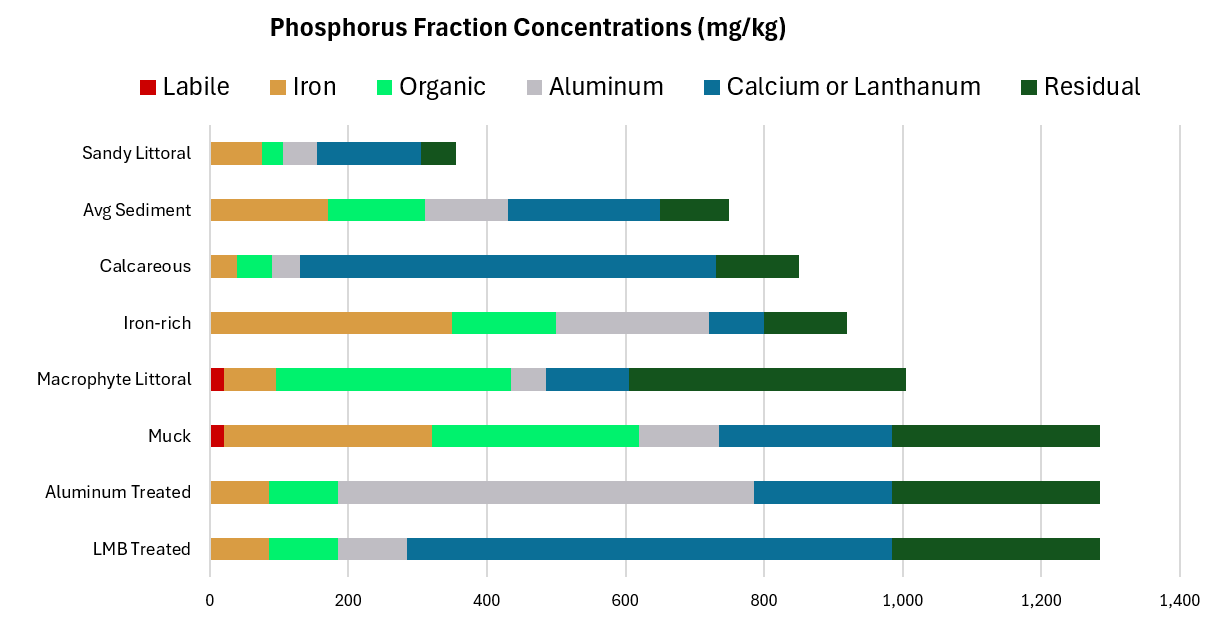
Sandy littoral sediment has low phosphorus in general. It is mostly chemically inert sand and silt with few binding sites and little organic matter. The average lake sediment, in contrast, carries a broad spread among all the fractions: calcium-bound phosphorus is usually the largest, followed by iron-bound and organic phosphorus, with aluminum-bound and residual phosphorus roughly even.
Iron and aluminum are correlated in sediments, and both are inversely correlated with calcium. Iron-rich sediment therefore carries more iron-bound and aluminum-bound phosphorus. Calcareous sediment is the opposite. It contains much less iron and aluminum, those metals have a lower affinity for phosphate in that chemistry, and much more of the phosphorus forms calcium phosphate minerals.
Organic and residual phosphorus are generally correlated, because both come from dead organic matter. Highly organic sediments, such as muck and the sediment beneath aquatic plant beds, have more of both. Algae biomass is much more releasable than plant biomass, which is more likely to leave residual phosphorus behind. Over long periods, the constant death, decomposition, and partial release of organic matter builds up residual phosphorus, especially in sediment dominated by aquatic plants.
Muck carries a large iron-bound and organic phosphorus inventory. It has less organic phosphorus than macrophyte sediment, because its organic phosphorus is released more quickly and much of it then binds to iron. Treated sediments show the effect of a binder directly. Alum and lanthanum treatments change the form the phosphorus ends up in: aluminum-bound phosphorus after alum, and the calcium-or-lanthanum fraction after lanthanum-modified bentonite.
03The four major release mechanisms
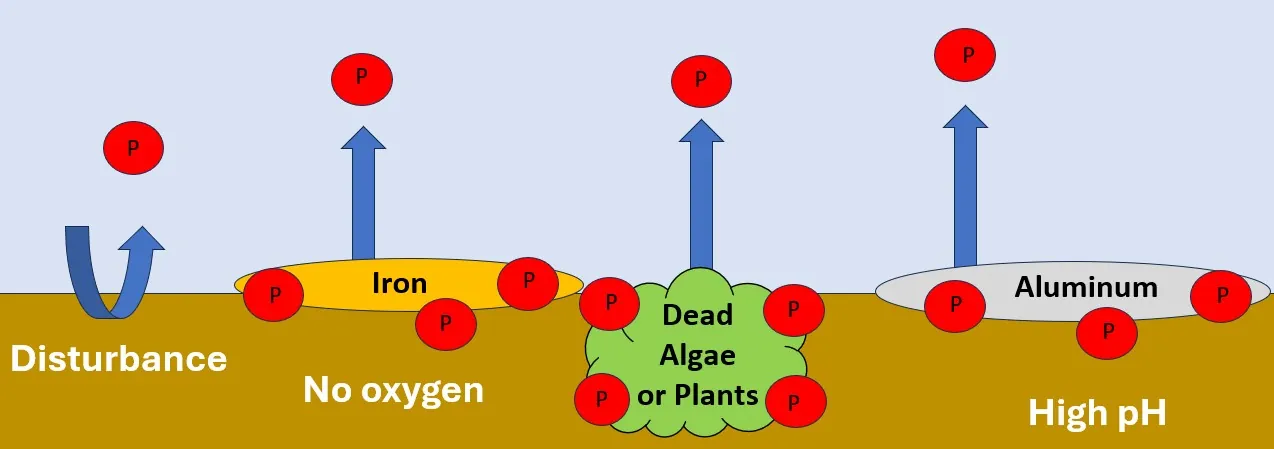
Several processes can release sediment phosphorus, sometimes at the same time. Their relative importance determines whether oxygenation, a binding treatment, disturbance control, or a combination is likely to help.
Loss of oxygen and reduction of iron
Reactive ferric iron minerals bind phosphate near an oxygenated sediment surface. As microbes consume oxygen and other electron acceptors, reducing conditions can dissolve some of that iron and release its phosphorus. Bottom-water DO around 1 – 2 mg/L is a useful warning range for investigating this transition, not a chemical switch: the reducing conditions develop within sediment, where oxygen can be depleted even while the water above still contains it.
The sequence also helps explain differences between years. Nitrate can support microbial respiration after oxygen declines and delay more strongly reducing conditions, so two summers with similar bottom-water DO needn't produce the same phosphorus response. We interpret oxygen, nitrate, iron, and phosphorus together to establish whether protecting the iron cycle is likely to reduce the load. [3]
High pH
Intense photosynthesis can increase pH as algae and plants remove dissolved carbon dioxide. At sufficiently high pH, phosphate can be released from iron oxide surfaces, and aluminum-bound phosphorus is released at about pH 9 and above. This can occur in shallow, productive water even when daytime oxygen is abundant. A midday oxygen measurement alone can therefore miss an important phosphorus-release mechanism.
Decomposition of organic matter
Algae and aquatic plants incorporate phosphorus as they grow. When they die, decomposition returns some of that phosphorus to forms available for further growth. The release is slow, and generally only ~50 – 75% of the organic phosphorus is released. Algae release far more of their phosphorus than aquatic plants, which leave more residual phosphorus in the sediment. Decomposition also consumes oxygen. The balance between recycling, long-term burial, and export depends on the organisms, temperature, sediment conditions, and movement of material.
Physical disturbance
Wind, currents, benthic fish, boats, and maintenance activities can resuspend sediment or exchange phosphorus-rich porewater with the lake. Resuspended particles may carry phosphorus without releasing all of it immediately. Turbidity, dissolved phosphorus, and the amount available to algae shouldn't be treated as the same measurement.
| Mechanism | Chemical or physical change | Evidence that distinguishes it |
|---|---|---|
| Reduction of iron phases | Fe(III) oxides can dissolve as iron is reduced to Fe(II), releasing associated phosphate | Oxygen and redox context, dissolved constituents, sediment fractionation and release experiments |
| High-pH desorption | Increasing pH changes mineral-surface charge and competition for binding sites | Day/night pH behavior, depth patterns and sediment response under relevant chemistry |
| Organic-matter mineralization | Microbial decomposition converts organic P into inorganic phosphate | Organic matter, temperature, oxygen demand and the forms of phosphorus released |
| Disturbance and transport | Resuspension, porewater exchange and organism activity move phosphorus | Turbidity, mixing, wind exposure, bottom disturbance and dissolved versus particulate P |
These processes can operate together. Oxygenated overlying water doesn't rule out release from reducing sediment microsites or from the other mechanisms. [3] [1]
Temperature changes reaction rates and biological demand. A lake can therefore show increasing internal loading before the entire bottom layer becomes anoxic. Conversely, a high total-phosphorus sample after a wind event may contain resuspended particles rather than a large increase in immediately available dissolved phosphate. That distinction affects both the diagnosis and the treatment objective.
Discuss the oxygen, pH, or mixing patterns you have observed →
04Iron, sulfur, and the ability to bind phosphorus again
In some sediments, phosphorus released during oxygen depletion can bind again when oxygen returns and iron oxides reform. This is one reason oxygenation can reduce internal loading. It also explains why seasonal mixing can change dissolved phosphorus without necessarily removing it from the lake.
Sulfur can interfere with this recovery. Under sufficiently reducing conditions, microbial sulfate reduction produces sulfide. Sulfide reacts with iron to form iron sulfide minerals, leaving less reactive iron available to bind phosphate. High total iron doesn't necessarily mean that sufficient reactive iron remains.[3]
Sulfate supply and decomposable organic matter help determine how much sulfide develops. Sulfate can arrive with mineral weathering, gypsum, wastewater, or saline groundwater, so this isn't confined to visibly brackish lakes. The source matters because a continuing sulfate input can keep changing the sediment's iron chemistry after an oxygenation system has been installed.
A paired iron and phosphorus record can be revealing. When both rise as oxygen declines, iron reduction is a plausible phosphorus source; when phosphorus rises while dissolved iron stays low, sulfide precipitation is one explanation worth testing. Mineral formation, reoxidation, and sampling location can also separate their behavior. We use that pattern to focus the sediment investigation, rather than treating a low dissolved-iron result as proof that no iron remains.
Sulfur chemistry can connect several symptoms that otherwise appear unrelated: sulfide odor, phosphorus available for another bloom, and continued oxygen demand as organic matter decomposes. A treatment that improves fish habitat may still leave part of that nutrient cycle active, so we assess each outcome against the process it was meant to change.
Iron can follow more than one chemical pathway
Another possibility is vivianite, an iron(II)-phosphate mineral, Fe3(PO4)2·8H2O. Its occurrence demonstrates why “anoxic sediment releases all its phosphorus” is an incomplete description. Iron availability, sulfide production, mineral formation, and burial can produce very different outcomes in sediments that all have little or no oxygen. [4]
These distinctions help explain why oxygenation can improve fish habitat and reduce some dissolved constituents while producing a weaker phosphorus response than expected. We separate those objectives in the evaluation, so a useful oxygen benefit is neither overlooked nor mistaken for proof of internal-load control. [5]
We evaluate reactive iron alongside phosphorus, sulfur chemistry, release measurements, and oxygen demand. That combination helps distinguish a lake where oxygenation could support existing binding capacity from one where an additional phosphorus-binding material may be needed. It also prevents an oxygenation project from being judged against a phosphorus outcome it was never chemically capable of delivering.
Iron amendment can sometimes restore binding capacity, using ferric salts or zero-valent iron that develops reactive surfaces. However, fresh iron can also react with sulfide or be reduced again. Its usefulness depends on the continuing sulfur and phosphorus loads, not simply on adding enough iron to raise a sediment total. [3]
05Establishing the importance of internal loading
How much phosphorus the sediment contains, how much is releasable, and how much crosses into the lake in one season are different quantities. A large inventory can release slowly, while a smaller reactive pool supplies phosphorus throughout the weeks when algae are growing. We need to know which quantity a proposed treatment changes before comparing its cost with another approach.
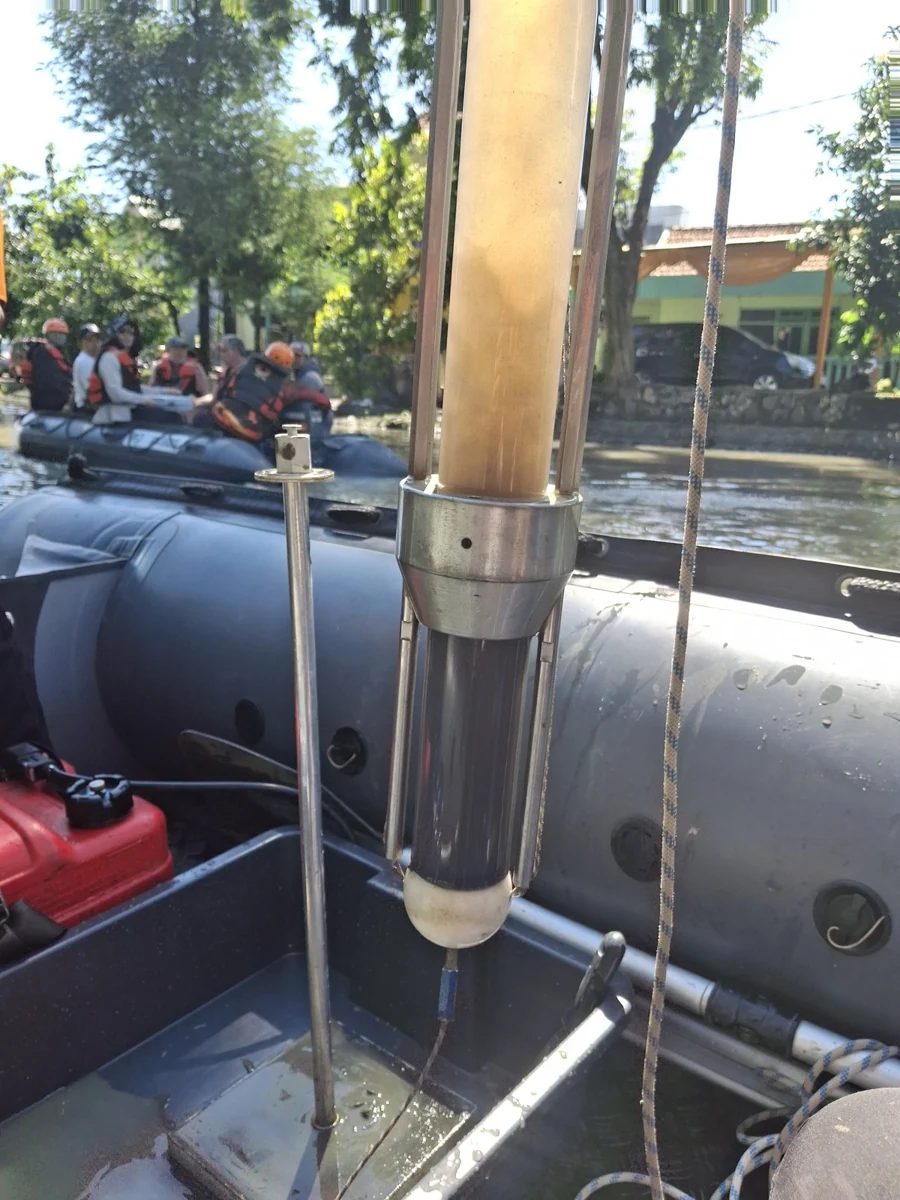
Early- and late-season depth profiles provide a useful starting point. We can compare the phosphorus mass accumulating below the thermocline with the timing of oxygen depletion and inflow events. That connects the budget with measurements a lake may already have, while accounting for settling, withdrawals, exchange between layers, and changes in deep-water volume before attributing the accumulation to sediment.
Release is an areal process, so a moderate flux over a large part of the bed can matter more than a high flux in one small pocket. Depth then affects how quickly that phosphorus reaches algae. Deep stratified water can store it below the lighted zone until mixing transports it upward; shallow water can return it to the growing zone much sooner. That difference changes both the urgency and the area a treatment needs to reach.
Spatial coverage matters as well. The deepest basin may accumulate fine organic sediment, but productive shallow areas can have substantial release or plant-mediated recycling. Representative zones are selected from bathymetry, exposure, inflows, sediment characteristics, and the management question. Multiplying one unusually active core by the entire lake area can overstate the problem; sampling only firm, accessible sediment can understate it.
The result we need for management is an estimate of the source that can actually be influenced, during the period that matters, with uncertainty explicit enough to compare options. More sampling is useful when it changes that estimate or the treatment choice.
Three measurements, three different questions
| Evidence | Question it answers | What remains uncertain |
|---|---|---|
| Sediment inventory and fractions | How much P is present, and in which operationally defined pools? | The rate, season and area over which that material becomes available |
| Intact-core incubations | How does the sampled sediment release or retain P under controlled conditions? | Representativeness of the cores and how laboratory conditions compare with the lake |
| Water-column mass balance | Is observed accumulation consistent with the estimated external and internal sources? | Unmeasured inflows, settling, uptake, export and transport between layers |
Agreement between independent evidence is more persuasive than treating any one measurement as a complete diagnosis. [1]
Nitrogen-to-phosphorus ratios can provide supporting ecological context. The familiar Redfield ratio is about 16:1 by moles, or 7.2:1 by mass, for nitrogen relative to phosphorus in a reference biomass composition. It's not a universal cutoff for dissolved lake samples or a prescription to add nitrogen. Nutrient forms, uptake, recycling and species composition must also be considered. [6]
Discuss your existing profiles and the source they may reveal →
06What the main treatments change
The choice comes down to whether the treatment can keep phosphate out of the growing zone through the conditions this lake actually produces: anoxia, pH swings, dissolved organic carbon, sulfide, and physical disturbance. We sell no chemicals and no equipment; the recommendation is the product. That lets us compare oxygenation, binding materials, and sediment removal against the same water-quality objective.
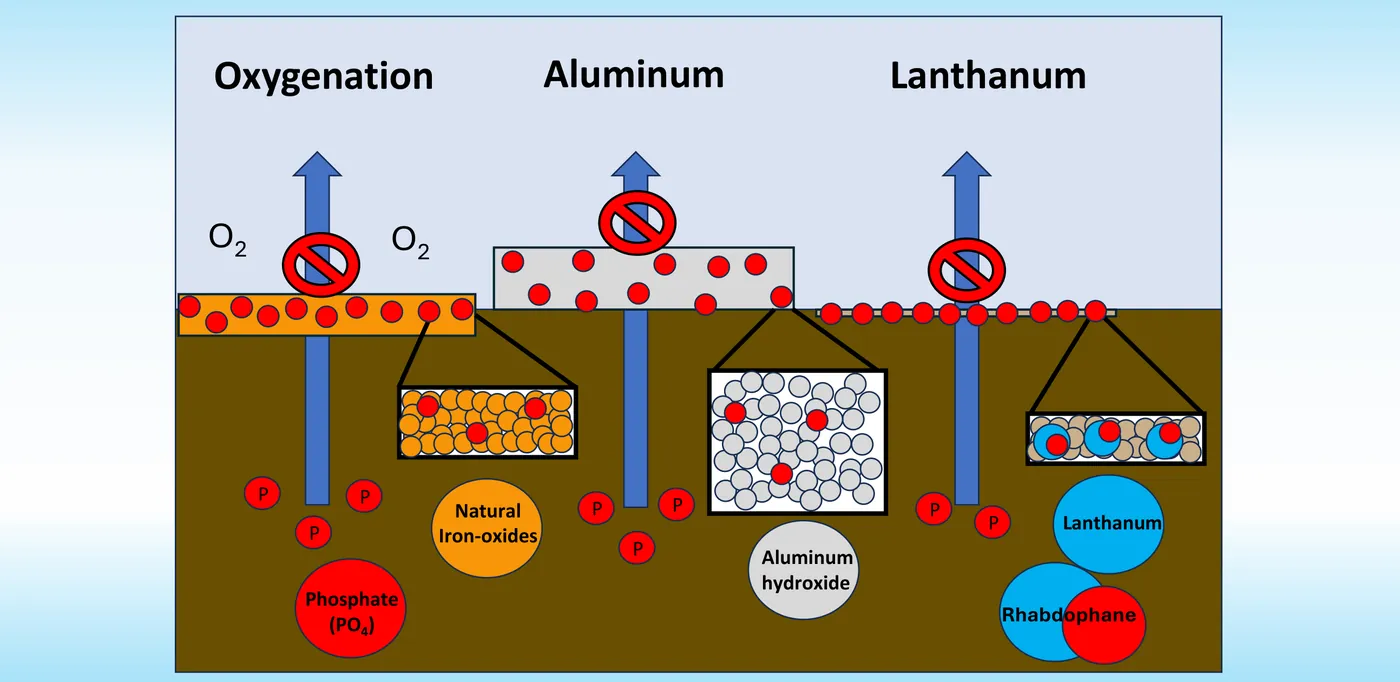
Oxygenation supplies oxygen to water that would otherwise become depleted. Where reactive iron is available and reduction is an important release mechanism, it can help maintain phosphorus binding. It can also improve oxygen conditions for aquatic life. Performance depends on meeting demand across the relevant sediment area without creating unwanted mixing or warming. Oxygenation doesn't remove phosphorus and can't prevent every high-pH or decomposition-driven release.
Aluminum-based inactivation creates aluminum hydroxide floc that binds phosphate and settles. Unlike iron binding, the main retention mechanism doesn't depend on maintaining oxygenated conditions. Its performance still depends on pH, alkalinity, application chemistry, contact with the target phosphorus, and later disturbance or burial. A product intended to remove phosphorus from the water column isn't necessarily designed to control the sediment source for years.
Lanthanum binds dissolved phosphate as a crystalline compound, commonly rhabdophane (LaPO₄·H₂O). Lanthanum-modified bentonite brings that reaction into contact with water and sediment; iron-coated formulations expose the lanthanum as the coating changes under reducing conditions. Dissolved organic carbon can compete for lanthanum and reduce phosphate binding. The target is dissolved orthophosphate, so this isn't a substitute for coagulation when the main task is removing suspended particles.[7]
Calcium phosphate is common enough in sediments to be chemically interesting, but its presence doesn't establish a reliable treatment. We need the reaction to form stable material, at the right location, under conditions the lake can tolerate. That combination of kinetics, competing chemistry, and biological exposure is why calcium remains a more limited lake-restoration approach.
Dredging or capping changes the physical sediment interface. Dredging can remove a targeted layer, while a cap can separate underlying material from the water. Both require knowledge of what lies beneath the present surface and how currents, organisms, and future deposition will affect the new interface. Removing sediment solely because it has high total phosphorus can miss the actual release source.
| Approach | Relevant chemistry | What ENV evaluates |
|---|---|---|
| Alum, polyaluminum chloride (PAC), aluminum chlorohydrate (ACH) | Aluminum hydroxide floc adsorbs phosphate. Formulations differ in pre-neutralization and acid demand. | Alkalinity, pH variation, phosphorus forms, sediment contact and ecological exposure |
| Lanthanum-modified bentonite | Lanthanum can form a sparingly soluble phosphate mineral; the carrier distributes it through the water and onto sediment. | Phosphate availability, dissolved organic matter, competing chemistry, settling and lanthanum behavior |
| Iron-coated lanthanum formulations | Reduction of the coating can influence exposure of the phosphorus-binding material. | Whether the activation and placement mechanism matches the intended sediment conditions |
| Oxygenation | Can preserve or regenerate reactive oxidized iron near the interface. | Reactive iron, sulfide, organic deposition, oxygen distribution and the location of phosphorus release |
| Dredging or physical isolation | Removes or separates an existing source. | Chemistry of the new interface, disturbance, disposal, habitat and the incoming load |
Aluminum-treatment evidence and oxygenation evidence answer different performance questions. [8] [9]
Aluminum hydroxide is amphoteric, becoming more soluble in sufficiently acidic or alkaline water. Around pH 6 – 8 is generally favorable for floc formation and phosphate retention; increasing aluminate formation above roughly pH 8.5 is an important concern during a high-pH bloom. Alkalinity determines how well the water buffers the acidity introduced by the coagulant, which is a separate issue from the bloom's carbon-dioxide-driven pH rise. We assess both before choosing a formulation and application window. [13] [10]
A binder changes the form of the phosphorus in the sediment, not the amount present. After an aluminum treatment, fractionation shows more aluminum-bound phosphorus (the sodium hydroxide extraction). After a lanthanum treatment, the phosphorus appears in the calcium-or-lanthanum fraction, because rhabdophane and calcium phosphate are extracted together with hydrochloric acid. Post-treatment fractionation therefore confirms where the phosphorus went; it doesn't separate lanthanum phosphate from natural calcium phosphate on its own.
We compare these mechanisms against the lake's measured conditions before selecting a product or system. The design includes ecological constraints, treatment distribution, expected duration, and evidence that will distinguish successful control from a temporary change in appearance.
The interactive Lake P companion compares aluminum and lanthanum mechanisms side by side. It provides another way to explore the chemistry while this guide supplies the sediment and seasonal context for choosing between them.
07Treatment timing, durability, and adaptive management
For seasonal sediment control, our starting principle is to put the binder in place before phosphorus release begins. In temperate lakes that commonly means a winter or early-season application, while phosphorus is still in the sediment and bloom-driven pH is less likely to complicate aluminum chemistry. In other climates the target is the local release season. Reactive applications can still have a defined purpose, but they address a problem that's already reached the water column.

Treatment duration depends on the amount and form of phosphorus addressed, the binding capacity delivered, continuing inputs, and the stability of the treated interface. Published averages are useful context but don't predict the life of a specific application. A small, budget-limited application aimed at a short-term water-column improvement may have a very different purpose and duration from a sediment treatment designed around the releasable pool.
In a study of 114 aluminum-treated lakes, Huser and colleagues reported substantial variation in treatment longevity. Differences between lake types and treatment conditions are more useful for design than quoting one average as a guarantee.
Our preferred approach where uncertainty can be resolved is small and early, then measured and adjusted. The initial treatment needs enough scale and coverage to answer a useful question, with an expected response written down in advance: less bottom-water phosphorus, a smaller seasonal oxygen deficit, or fewer bloom events. The next application follows what changed in those measurements, rather than assuming that immediate clearing means the source is controlled.
Where the material goes matters as much as the amount applied. If most release comes from a few depositional zones, spreading the same dose uniformly can leave those areas undertreated while using material elsewhere. Comparing treated and untreated areas, alongside weather and inflow conditions, gives us a better basis for refining distribution than a single lake-wide average.
Our role is to connect those observations to the next decision: continue, adjust, address a remaining source, or stop an approach that's not producing the intended benefit. That's more informative than repeating an application solely because the water became clearer immediately afterward.
Published treatment longevity and its interpretation
Huser and colleagues evaluated 114 aluminum-treated lakes. Mean longevity of improved water quality was 11 years overall, with means of 21 years in deeper stratified lakes and 5.7 years in shallow polymictic lakes. These are study averages across different settings and treatments, not expected service lives for a proposed application. [8]
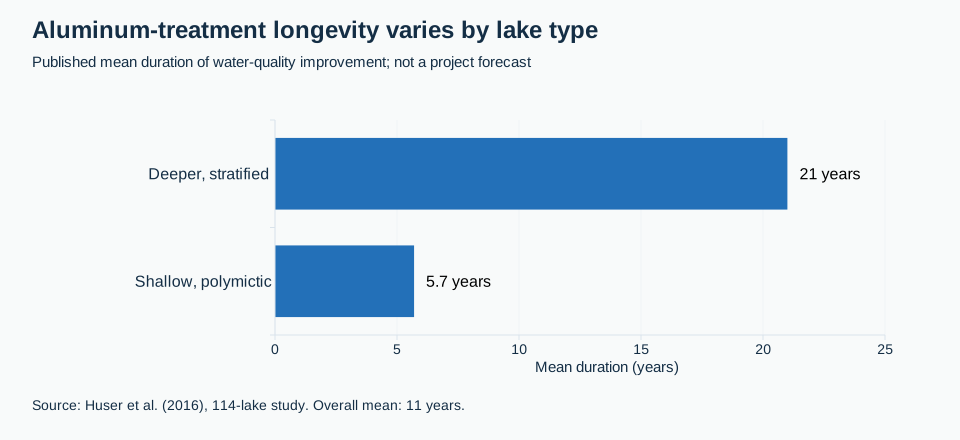
Long-term performance reflects the treated inventory, new phosphorus inputs, lake shape, sediment disturbance, and the distribution of binding material.
Adaptive management uses follow-up chemistry and biological response to distinguish inadequate coverage, renewed external loading, and another cause of the original symptom. That makes a follow-up treatment a reasoned adjustment rather than an automatic repeat of the previous application. [11]
Fresh aluminum floc also changes as it ages. Laboratory work demonstrates declining phosphate adsorption with aging, and ENV's field experience indicates that much of a fresh floc's unused adsorption capacity can be lost over roughly 1 – 2 years. That isn't the same as releasing the phosphorus already bound. In our planning, a budget-limited application without watershed improvement often buys about 1 – 2 years before follow-up is needed, while a sediment treatment matched to the releasable pool can deliver much longer benefits. [13]
In the Huser analysis, aluminum dose accounted for 47% of the variation in longevity, with watershed-to-lake area ratio accounting for another 32%. Those associations reinforce the need to consider treatment capacity and ongoing supply together; they aren't a transferable dose calculator. [8]
08Applying the evidence to a small urban lake
A small, shallow urban lake in Northern California continued to experience algae blooms after low-dose phosphorus-binder treatments. The earlier applications had provided insufficient control of internal loading and occurred when phosphorus was already becoming available.
The revised approach selected a binder using the lake's chemistry and moved application into a winter window, before the seasonal release period. The project achieved more effective phosphorus removal at a lower applied volume than the previous treatments. This is an anonymized ENV project; the outcome is reported qualitatively.
The lesson is pre-emptive timing: the binder was placed before the lake's release season, rather than waiting for phosphorus to support another bloom. Winter provided that opportunity in this lake. Follow-up evidence is still needed to establish how long the benefit persists and whether later inputs require another intervention.
ENV can review an existing treatment program, investigate sediment release, or develop a phosphorus-control strategy for a lake that hasn't yet been treated. The starting point is the available evidence and the water-quality outcome the project needs to achieve.
References & resources
Research and technical guidance supporting this guide. Advisory and regulatory information checked September 2026; local requirements may differ.
- Nürnberg (2009). Assessing internal phosphorus load: Problems to be solved. ↩
- Søndergaard, Jensen & Jeppesen (2003). Role of sediment and internal loading of phosphorus in shallow lakes. ↩
- Hupfer & Lewandowski (2008). Oxygen controls the phosphorus release from lake sediments: a long-lasting paradigm in limnology. ↩
- Rothe, Kleeberg & Hupfer (2016). The occurrence, identification and environmental relevance of vivianite in waterlogged soils and aquatic sediments. ↩
- Gächter & Wehrli (1998). Ten years of artificial mixing and oxygenation: No effect on the internal phosphorus loading of two eutrophic lakes. ↩
- Guildford & Hecky (2000). Total nitrogen, total phosphorus, and nutrient limitation in lakes and oceans: Is there a common relationship?. ↩
- Spears et al. (2016). A meta-analysis of water quality and aquatic macrophyte responses in 18 lakes treated with lanthanum modified bentonite (Phoslock®). ↩
- Huser et al. (2016). Longevity and effectiveness of aluminum addition to reduce sediment phosphorus release and restore lake water quality. ↩
- Singleton & Little (2006). Designing hypolimnetic aeration and oxygenation systems: A review. ↩
- U.S. EPA (1999). Enhanced Coagulation and Enhanced Precipitative Softening Guidance Manual. ↩
- Williams, Szaro & Shapiro (2009 printing). Adaptive Management: The U.S. Department of the Interior Technical Guide. ↩
- Jeppesen et al. (2005). Lake responses to reduced nutrient loading: an analysis of contemporary long-term data from 35 case studies. ↩
- de Vicente, Huang, Andersen & Jensen (2008). Phosphate adsorption by fresh and aged aluminum hydroxide: consequences for lake restoration. ↩
Let's talk about your sediment data
We can investigate sediment release, review an existing treatment, or design a phosphorus-control strategy around your lake’s chemistry.
A conversation can start with what you've observed. If you have depth profiles or sediment results, we can discuss how they fit the lake's seasonal changes and which sources deserve closer investigation.
Schedule a conversation