Water Chemistry Solutions for Lake Restoration
A guide to understanding the drivers of algae bloom, invasive plants, and fish kills, the monitoring tools available to help understand the root(s) of the problems, and the long-term, scientific solutions for better water quality.
In practice. A small urban Californian Lake
Jump to the case →In this guide
- The majority of water quality issues stem from decades of nutrient loading from the watershed and the storage of dead algae/plant biomass in the sediment.
- Algaecides and herbicides kill nutrient-containing biomass. The decaying organic matter releases it back into the water, fueling the next algae bloom or plant invasion.
- Watershed and sediment nutrient mass balances determine where the water quality solution should be focused.
- The most effective way to suppress sediment-phosphorus release depends on the sediment-water interface chemistry. Oxygenation works well in iron-rich lakes, aluminum works well in deeper lakes, and lanthanum-based products are typically the most reliable in shallow lakes with unpredictable water chemistry.
- We do not advocate for silver bullet lake water quality solutions or one-time massive lake treatments. Adaptive management (small treatments with outcomes compared to expectations) is the most economically and scientifically justified approach. It's not very reasonable to expect that problems that developed over decades can be solved overnight.
01The treatment worked, the lake cleared, and the algae bloom returned
A bloom that returns on schedule is the symptom of several different failures, and telling them apart afterward takes data that was never collected.
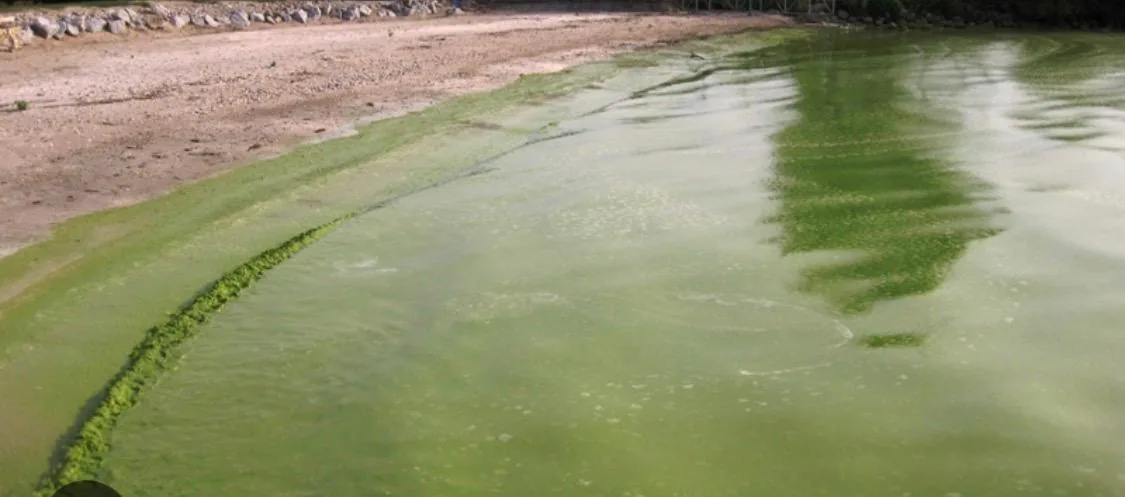
Most lake boards know the pattern. An algae bloom develops in July, the boat ramp fouls, complaints arrive, and a contractor treats the lake within the week. Six weeks of relief follow. However, the bloom returns, and the worst bloom of the season often develops a few weeks after the largest treatment.
That timing isn't coincidence. An algaecide kills biomass and leaves the phosphorus that grew it exactly where it was. Killed cells settle, bacteria go to work, and decomposition pulls oxygen down at the sediment surface. Lose oxygen there and Fe(III) oxyhydroxides reduce to Fe(II), releasing phosphate that had been bound for years. The treatment has, in effect, fertilized the next bloom. In the vegetation programs we've reviewed, the secondary bloom lands two to four weeks behind the kill.
"It stopped working" covers several different failures. The treatment may have hit the wrong source; watershed retrofits do nothing for a lake fed by its own sediment, and a sediment binder does little for a lake with a pipe still running. Or the mechanism was right and the dose was wrong, sized to lake volume and not to the mobile sediment inventory it had to cover. Or nothing failed at all, and the treatment reached the end of its design life needing a reapplication nobody budgeted.
Each failure carries a different cost. Re-dosing a lake that needed watershed work buys another two seasons of the same problem. Re-dosing one that simply came due is routine maintenance. Clear water and a complaint log can't separate those two, which is why the diagnosis belongs before the next treatment is funded instead of after the third failed summer.
02Is the phosphorus coming from your watershed or your sediment?
Both sources put the same total phosphorus on the same lab report.
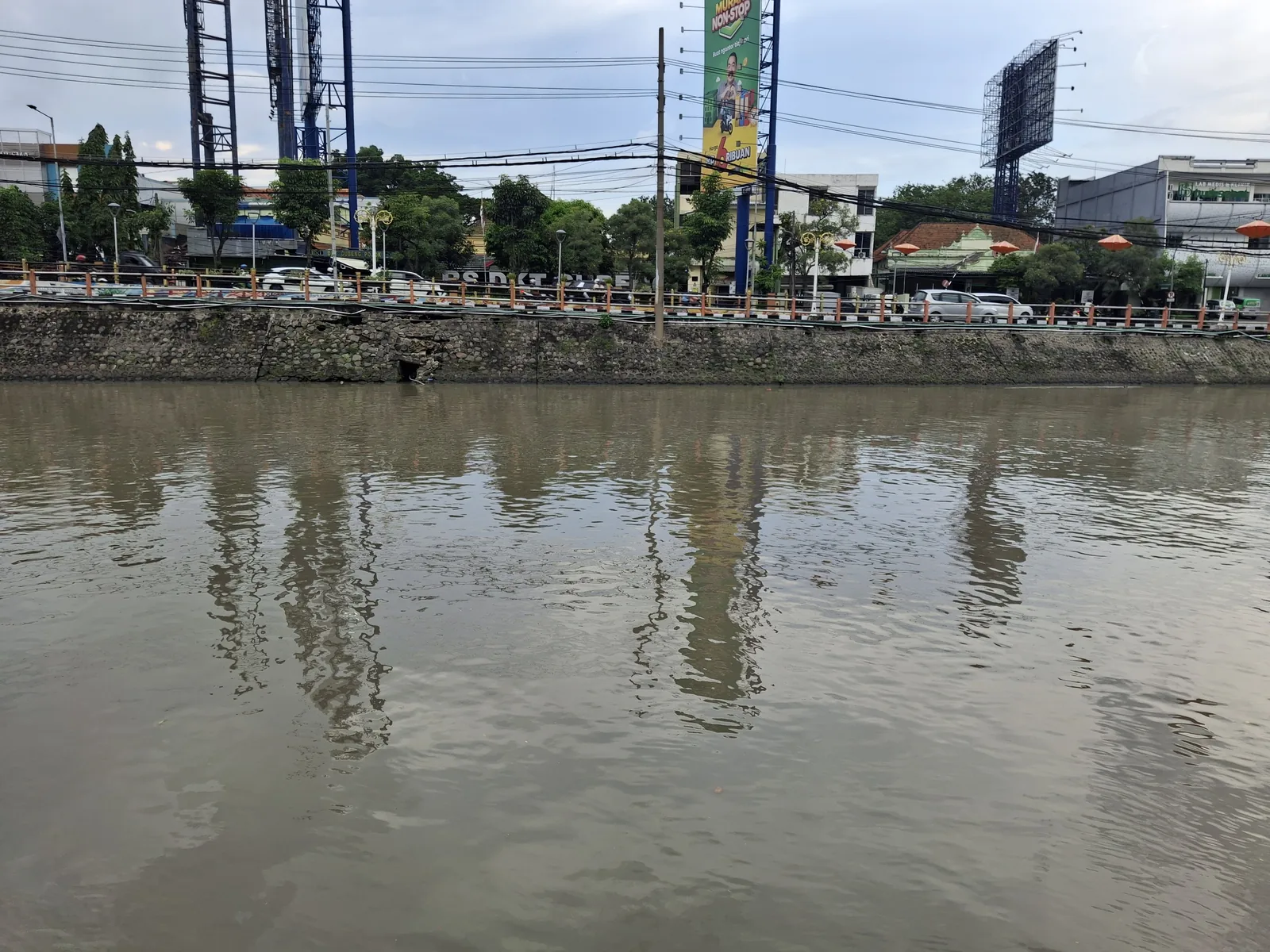
Two lakes can carry identical total phosphorus and need opposite remedies. In one, phosphorus arrives from the catchment every time it rains. In the other, the watershed's been clean for a decade and blooms hold because the sediment reloads the water column each summer. The lab report is identical, and six figures separate getting that call right from getting it wrong.
External load gets sized out on the land. Storms carry it. Most of a tributary's annual phosphorus rides a handful of events when flow and concentration spike together, so grab samples collected in fair weather under-read the annual load badly. Flow-weighted composite sampling paired with continuous stage measurement is what survives a regulator's challenge. Skip the storm sampling and the whole diagnosis tilts toward the sediment.
Internal load gets sized in the lake. Through the stratified season the hypolimnion is largely sealed, so repeated soluble reactive phosphorus profiles at depth show phosphorus piling up where it's released. Multiply that accumulation rate by the anoxic sediment area and you have an annual internal load in kilograms. Intact-core incubations and porewater flux cross-check it. We've profiled lakes where everyone assumed agricultural runoff and the sediment record showed a legacy internal load that will continue releasing phosphorus regardless of what happens upstream.
Totals aren't useless. Total phosphorus is the right measurement for load, for trend, for inventory, for a mass balance, and for compliance. It's the wrong measurement for predicting what releases next August, and capital requests get built on it anyway. Fund a watershed retrofit on a lake that's seventy percent internal and you'll watch blooms return on schedule with the budget gone. Run it backwards and fresh external phosphorus overwhelms the binder inside two seasons.
03The water quality consequences of low dissolved oxygen
Dissolved oxygen trends at the thin sediment-water interface can dictate water quality for the hundreds of acre-feet above it.
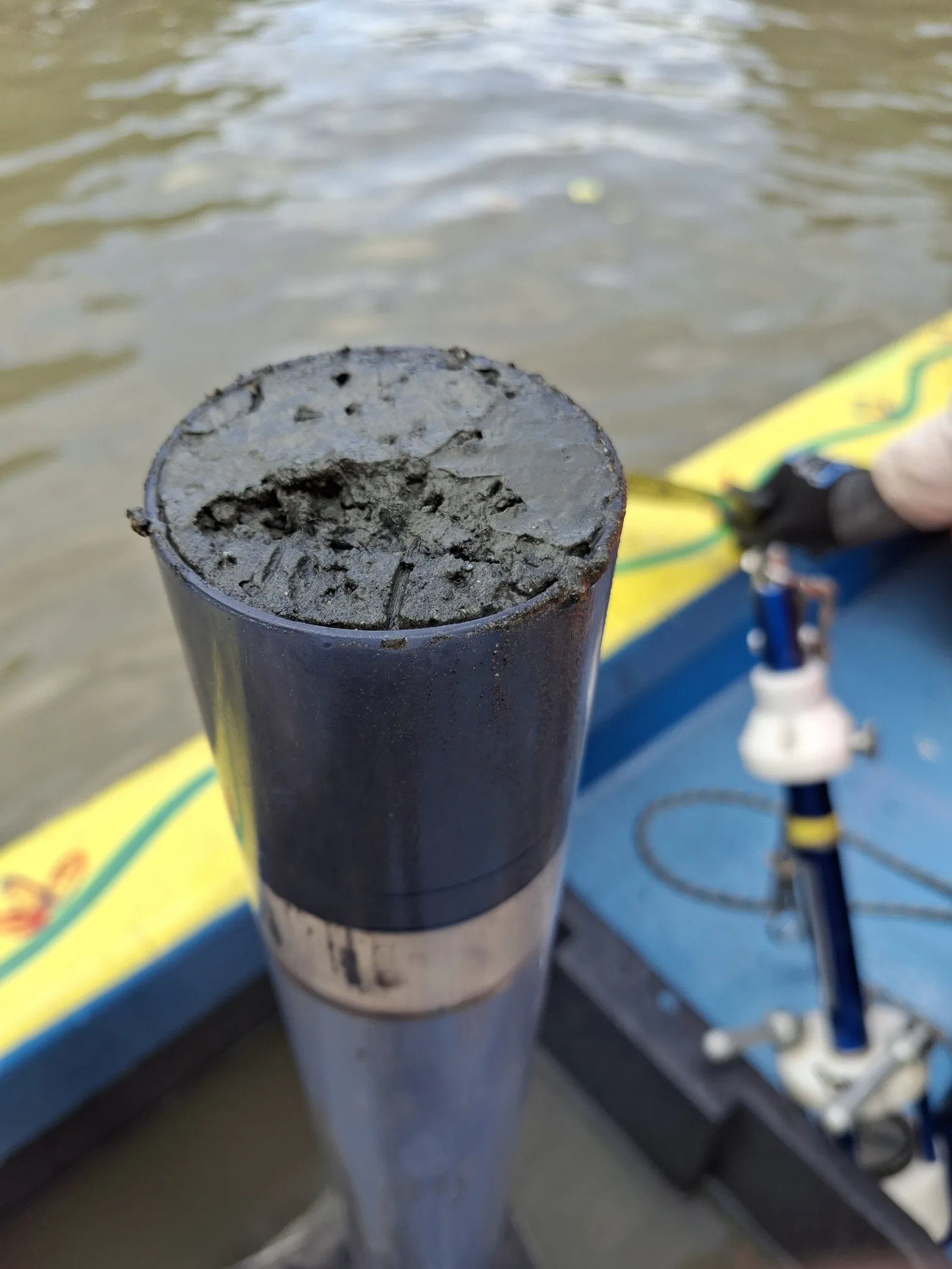
Treat the sediment as a reactor and the pattern isn't mysterious anymore. While oxygen still reaches the sediment surface, Fe(II) diffusing up from below oxidizes, precipitates as a red-brown ferrihydrite layer, and scavenges porewater phosphate on contact. Fresh ferrihydrite carries very high surface area and substantial phosphate adsorption capacity, and that capacity exists only while the iron stays oxidized.
Stratification sets the clock. Once the thermocline locks in, the hypolimnion loses its connection to the atmosphere, and a productive lake will run it to zero in weeks. Oxygen goes, Fe(III) reduces to Fe(II), the oxide layer dissolves, and phosphate that had been bound for decades enters the porewater. The oxidized layer is millimeters thick, while the reducing zone beneath it can span the entire hypolimnion. A millimeter-scale boundary regulates a meter-scale reservoir of mobile phosphorus, and it is inexpensive to lose and expensive to rebuild.
Sulfur decides whether the switch is recoverable. Where porewater sulfide is abundant, Fe(II) precipitates as iron monosulfide and pyrite, and that iron will not return to re-form the oxide layer when oxygen returns; the binding capacity is gone on management timescales. Where sulfide is low and phosphate high, the same reduced sediment can build vivianite instead, a stable sink that forms below the redox boundary. Acid-volatile sulfide, chromium-reducible sulfide, and the degree of pyritization tell you which sediment you have, and we measure them rather than assume them.
Organic matter sets the pace. Eutrophic lakes stay eutrophic because carbon flux to the sediment outruns the sediment's capacity to oxidize it. Across roughly 100 samples in our own dataset, releasable phosphorus tracked dry bulk density far better than total phosphorus did. Low-density organic sediment gives up the most, and a total-P value can't see that axis at all. So two lakes with the same total phosphorus can need opposite remedies: oxygenation where the iron is intact, a redox-insensitive binder where the iron is already pyrite. Purchase the wrong one and the treatment delivers no water quality benefit.
04Reactive algaecide treatments can make the water look great, but leave behind invisible, underlying issues
The toxin your lab screens for may not be the one that made the dog sick.
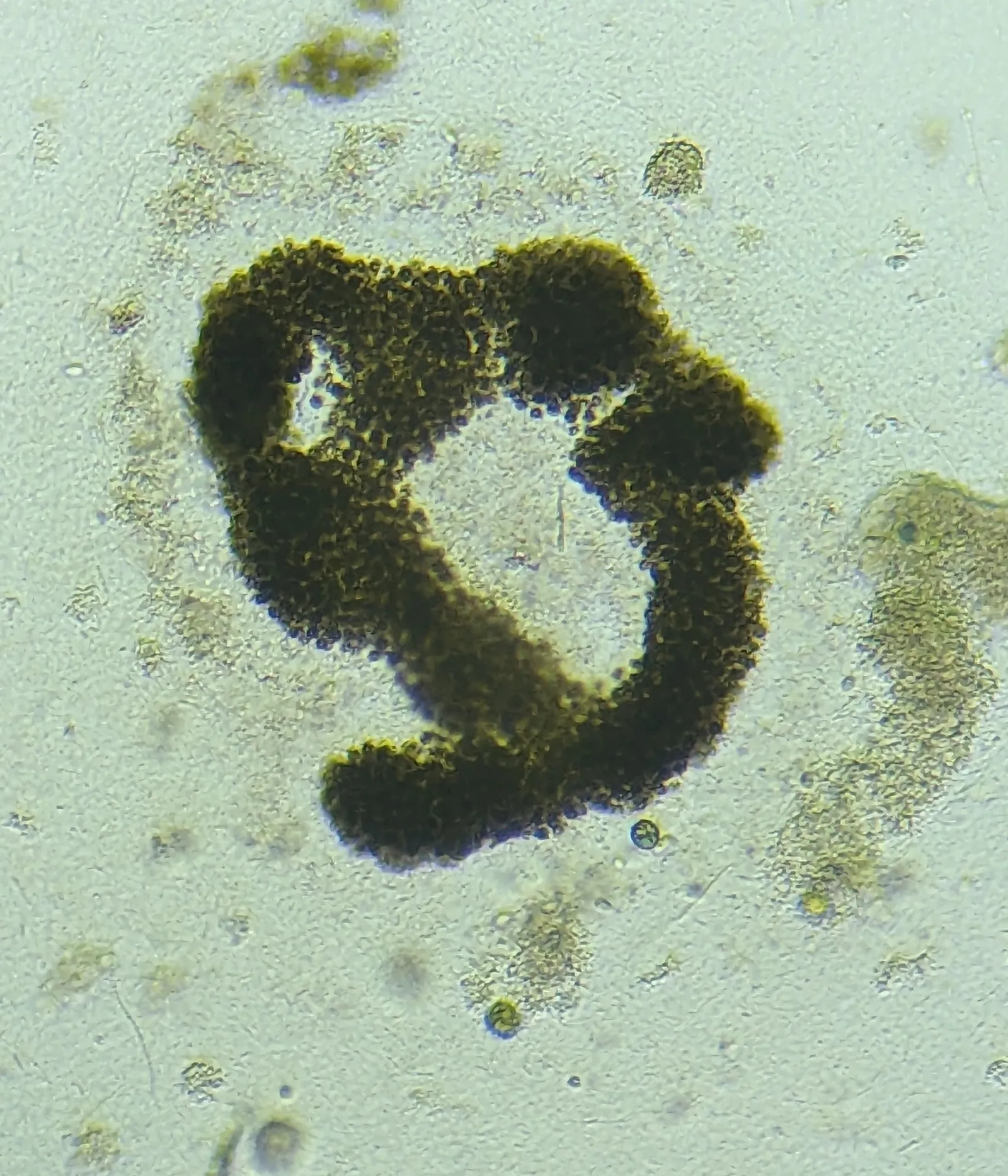
Cyanotoxins aren't one problem. Microcystin sits mostly inside living cells until they lyse, then goes dissolved. Cylindrospermopsin carries a large dissolved fraction even in healthy populations, so it slips past cell-removal steps that handle microcystin well. Anatoxin-a often comes from benthic mats on the sediment, which means a clean surface grab can sit above a mat that's making neurotoxin right then. Saxitoxins are potent enough that the threshold, and not the removal, is the hard part.
Copper and peroxide lyse cells. They don't select by species. Lysing a heavy standing crop converts a manageable intracellular load into a dissolved spike, which is the wrong outcome a few hundred meters from an intake. Behind it comes the oxygen sag as dead biomass decays, and behind that the redox release. A lysing treatment applied without regard to the standing toxin load sets up the next bloom.
Numbers you manage against carry different legal weight, and boards mix them up constantly. EPA's ten-day drinking-water Health Advisories sit at 0.3 and 1.6 µg/L for microcystins and 0.7 and 3.0 for cylindrospermopsin, split by age group. Recreational criteria run far higher, near 8 µg/L for microcystins. Anatoxin-a and the saxitoxins have no final federal advisory, so state guidance fills the gap and the number changes when you cross a state line. Toxin genes aren't toxin. A qPCR hit for mcyE says the population can make microcystin, not that it's making any today.
A reservoir that blooms every August isn't having an emergency. It's a chronic condition managed with an emergency-room protocol, and the gap between those two is where utilities lose money and accumulate exposure. Emergency carbon, emergency oxidant, overtime, and the standing risk of a do-not-drink notice are annual costs nobody books as one line. One high-visibility advisory reshapes a utility's budget and governance for years.
05Killing the weeds releases the nutrients that grew them
The nutrients in plant tissue are not removed when the plants die; they are released back to the water and the sediment.
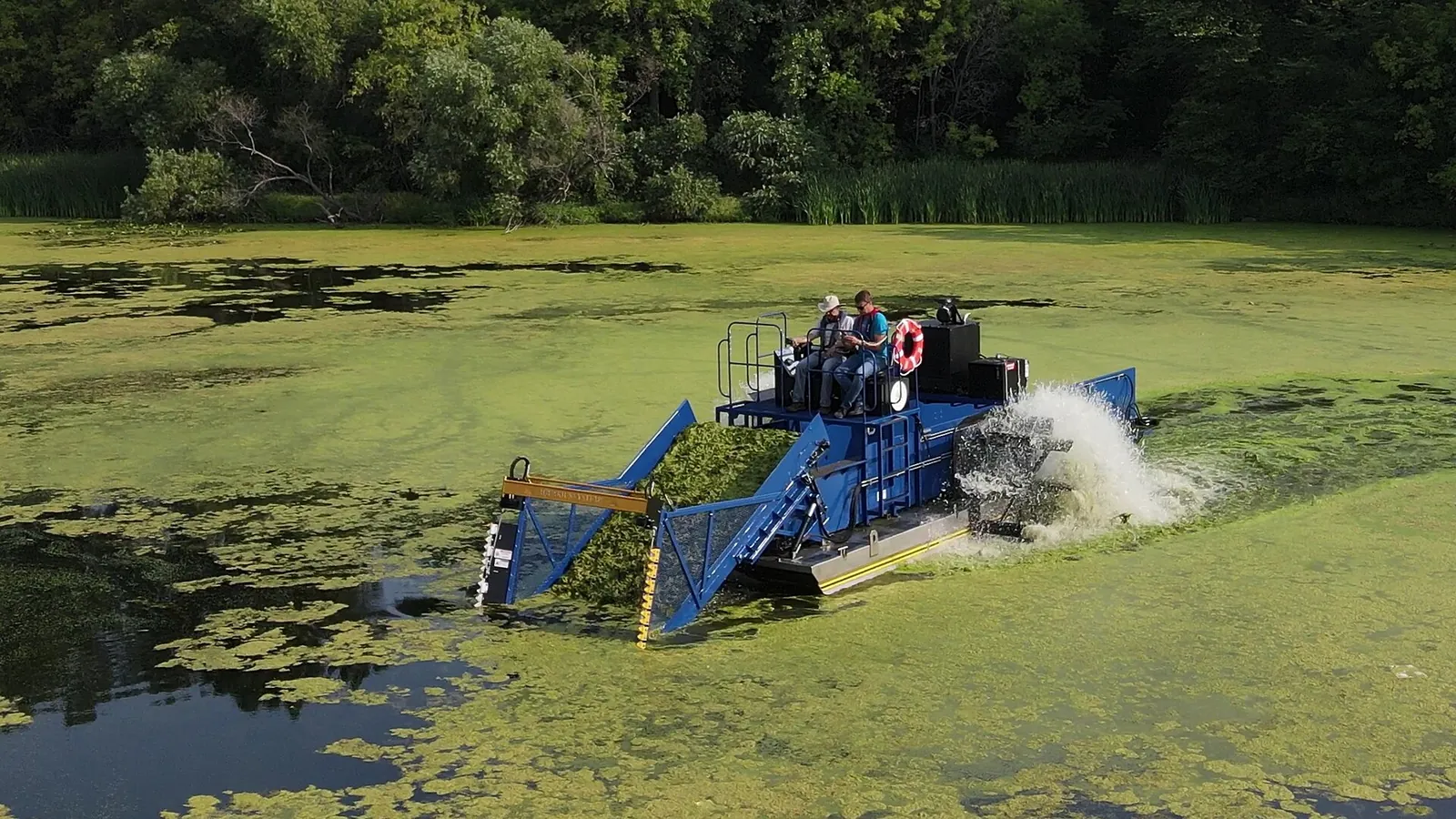
Herbicide removes plants. It doesn't remove phosphorus. Tissue-bound nitrogen and phosphorus mineralize in place, decomposition drives an oxygen sag near the bed, and that sag unlocks sediment phosphorus that was stable a week earlier. Kill, decay, oxygen sag, remineralization, redox release, then a secondary bloom. Every link has a rate, so the sequence has a window and not a date. Two to four weeks is the field pattern, and it compresses in warm stratified water over phosphorus-rich sediment.
Healthy submerged vegetation performs work worth keeping. Rooted beds retain phosphorus in the root zone, armor the sediment against resuspension, damp wave-driven turbidity, and compete with cyanobacteria for the same nutrients. Clear the whole basin and you convert a phosphorus sink into a phosphorus source in the worst month of the year. We've watched lakes flip from macrophyte-dominated and clear to phytoplankton-dominated and turbid on exactly that move.
Removal method, timing, and biomass budget matter more than the label on the drum. A contact herbicide on a plant needing systemic uptake buys regrowth. A whole-lake kill in August runs every clock at maximum speed. And "algae" isn't a target: planktonic Microcystis, benthic Lyngbya mats, and filamentous Pithophora want different tools in different weeks. Copper adds its own trap, because free Cu²⁺ does the damage and soft, low-alkalinity water has less carbonate and organic matter to bind it. A dose that's routine in hard water can run fish-toxic in soft.
Ask how much vegetation, where, and paired with what. Treat or don't treat was never the real call. Standard plans still set a goal of clearing 90 to 100 percent of nuisance vegetation lakewide. That is the setting most likely to produce a secondary bloom and a permanent annual retreatment line.
06Picking the intervention, then running it in the right order
Each tool moves the same handful of state variables, and the second one lands on whatever the first left behind.
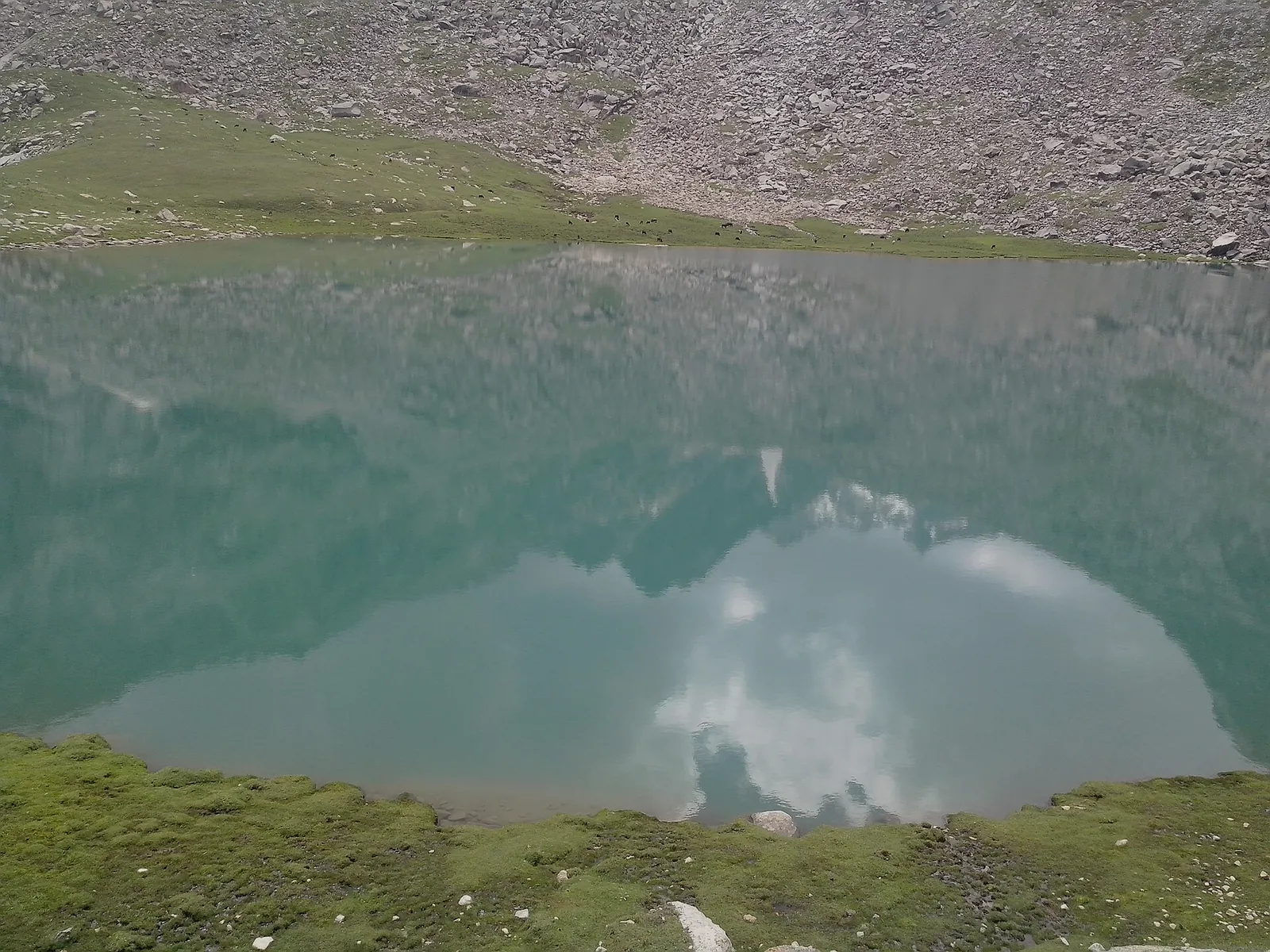
Match the mechanism to the driver and most of the selection falls out. Aluminum provides Al(OH)₃ adsorption sites that keep phosphate bound through anoxia, which makes it the workhorse for well-buffered stratified lakes. It also consumes alkalinity, and in soft water the pH can fall out of the roughly 6 to 8 window where the floc remains stable. Lanthanum-modified bentonite binds phosphate as crystalline rhabdophane and is indifferent to redox, so it earns its cost on hotspots and high-sulfate sediment. Iron works until sulfide strips it. Calcium remains essentially unproven in lakes.
Hypolimnetic oxygenation keeps the native Fe(III) oxides working instead of replacing them. The design test isn't whether the aerator runs; it's whether delivered oxygen flux exceeds measured sediment oxygen demand across the whole stratified season. Most installations we've audited fail that comparison. They aerate water and never reach the surface they were bought to oxidize. Watershed source control moves the equilibrium the chemistry fights against, slowly. A constructed wetland faces the same test a sediment does: aerobic surface layer, or saturated soil exporting dissolved phosphorus downstream.
Order decides whether these reinforce or cancel. Run circulation after a coagulant has settled and consolidated, never before; mixing lofts the floc you paid for and drags nutrient-rich bottom water into the light. Oxygenate a sediment whose iron is already pyrite and the system delivers nothing, which is why the sulfide assay comes before the compressor quote. Dose alum into a soft-water epilimnion with no alkalinity to buffer the pH and a phosphorus treatment becomes a toxicity problem.
Timing carries the other half. April's lake isn't August's lake, a coagulant wants a stable stratified window to consolidate into, and circulation is at its most destructive near turnover. What none of these delivers is worth saying plainly. Binders don't outlast a watershed that keeps refilling the pool. Oxygen doesn't help where resuspension re-exposes sediment faster than a seal can hold. Watershed work won't clear a lake on a timeline a board will accept.
07What a decade actually costs, and how you'd know it held
Nobody adds up the recurring spend.
A vendor quote prices one application. It doesn't price the program. Your board is deciding whether to enter one. A program carries costs the quote never shows: the capital event, the monitoring that recurs whether you treat or not, the repurchase cadence, and the price of a wrong diagnosis. That last line sinks budgets, and it never appears as a line.
Durability rides on how well the dose covers the mobile sediment pool, on whether the external load is genuinely controlled, and on lake type. Deep stratified systems hold substantially longer than shallow polymictic ones. Fast reactive treatments buy weeks to months, so across ten years you'll pay a couple of dozen times, each application dragging its own monitoring and complaint handling behind it. Anyone quoting you a single universal longevity number isn't diagnosing.
Verification has to follow the mechanism. Clarity won't tell you which. An alum dose succeeds or fails on whether redox-sensitive sediment phosphorus converted to a stable bound form. The honest measurement is Psenner fractionation and porewater profiles across the sediment-water interface, read across a full stratified season. A clean spring total-P sample looks excellent while the mobile fraction quietly reloads underneath it. An oxygenation system is proven by continuous dissolved oxygen logging at depth, never by a healthy mid-column reading. The convenient measurement is the symptom.
A real plan carries the attribution, the sequence, cost ranges with honest uncertainty, and triggers that say what you'll do when a value crosses a line. Its most valuable line is usually "not this, and not yet." We don't sell binder, aeration hardware, or application services, so a recommendation to spend nothing costs us nothing to give. If your program keeps funding the same treatment every few years and nobody can say why the last one slipped, that's the conversation worth having before the next treatment is funded.
08In practice
Proactive Phosphorus Inactivation, Urban Swimming Lake, Northern California
Cases are anonymized by default: client type and region, not names. Named versions with full data are available where the client has approved release.
If you've got monitoring history and a treatment record, send them over and let's work out what your lake is doing before anyone quotes you a dose.
Start a conversationThe other problem guide