In this guide
- Commonly overlooked problems that lead to HABs
- Algae biochemistry and competitive advantages
- Cyanobacteria and toxins
- Reactive algaecide treatments: Pros and cons
- Algae prevention with nutrient management
- Aquatic plants: The good, the bad, and the ugly
- Smell, scum, and foam
- Proactive cyanobacteria, algae, and aquatic plant management
- Proactive phosphorus control at an urban swimming lake
- References & resources
01Commonly overlooked problems that lead to HABs
The timing of a bloom can reveal more about its cause than its appearance. A bloom following tributary flow raises a different source question from one following a hot, calm period or a mixing event. A recurrence after plant removal or an algaecide treatment adds another possibility: the nutrients and oxygen demand associated with the previous biomass. We connect those events with the organisms present to understand why this lake supports this problem.
Nutrients may arrive with watershed inputs or be recycled within the lake. Sediment can release phosphorus when iron minerals are reduced, pH rises, organic matter decomposes, or sediment is disturbed. Plant and algal biomass can also return nutrients as it breaks down. A lake can therefore continue to support blooms even after some new inputs have been reduced.
The delay between a nutrient pulse and visible growth changes with temperature, light, and the existing community. That's why we're interested in the weather and operations in the weeks before a bloom, not only conditions on the day it was reported. Those observations can help distinguish new growth from wind concentrating cells that were already present.
Surface accumulations also reflect transport. Wind can concentrate buoyant material along a shore without a proportional increase in total lake biomass. A beach may experience a dense scum while a central station shows less obvious growth. Benthic mats can present a separate problem without a large open-water bloom.
| Process | How it can support growth | Why it is easy to overlook |
|---|---|---|
| Sediment recycling | Phosphate released from sediment replenishes the water-column supply. | An inflow-focused program may miss a seasonal internal source. |
| Shallow productive margins | Light, warmth, organic material and direct contact with the growing zone can support local growth. | A deep central station may not represent shoreline conditions. |
| Intermittent mixing | Accumulated nutrients move from depth into illuminated water. | A sample collected after uptake can miss the preceding nutrient pulse. |
| Long retention and sheltered water | Organisms and available nutrients remain together long enough for growth. | Concentration alone does not describe transport or residence time. |
| Decay of an earlier population | Decomposition consumes oxygen and returns nutrients to circulation. | The visible population may be gone while its chemical effects remain. |
| Community composition | Different organisms respond differently to nutrients, light, temperature and grazing. | Similar chlorophyll concentrations can conceal different biological risks. |
The relative importance of these processes determines which preventive measures are likely to help. [1] [2]
A harmful algal bloom (HAB) is defined by its harmful effects, which can involve toxins, oxygen depletion or other impacts. A conspicuous surface accumulation may be caused partly by wind concentrating buoyant cells, whereas substantial growth can also occur below the surface. The relationship between biomass, distribution and harm is part of the diagnosis, rather than a simple ranking by how dense the bloom looks. [3]
A conversation can start with where growth appeared, when it returned, and what happened beforehand. If you have photographs, treatment dates, weather observations, or a few oxygen profiles, we can use them to identify which connection deserves closer investigation. You don't need a complete monitoring record before we can discuss the problem.
02Algae biochemistry and competitive advantages
Algae are an essential part of aquatic food webs. They convert light and nutrients into biomass that can support zooplankton, invertebrates, and fish. Problems develop when the amount, location, or type of growth interferes with lake use, habitat, or water treatment.
A spring diatom bloom changes the resources available to the organisms that follow it. Diatoms need silica for their cell walls as well as nitrogen and phosphorus, so silica drawdown can shift competition toward other groups. Early denitrification can also reduce nitrate availability. Neither event sets an irreversible seasonal schedule, but together with mixing and temperature they help explain why the same lake can favor different communities in different years.
Some cyanobacteria can regulate buoyancy, store nutrients, tolerate low light, or use atmospheric nitrogen. These traits aren't shared by every species or strain. Nitrogen fixation also has energetic and environmental constraints. A nitrogen-to-phosphorus ratio alone can't predict which organism will dominate.
Oxygen-depleted sediment can supply ammonium, dissolved iron, and phosphate together. Where those nutrients reach a low-light layer occupied by cyanobacteria, the physical position of the population can become as important as a surface nutrient result. Iron is also needed for processes such as nitrogen fixation, but its biological availability depends on chemical form, not simply the total concentration. [1] [2]
The management objective is usually a functioning, usable ecosystem with acceptable nuisance and health risks. Eliminating all biological growth would remove the basis of the food web. We evaluate which part of the community or its supporting conditions needs to change to meet the actual objective.
| Trait | Advantage under suitable conditions | Important limitation |
|---|---|---|
| Buoyancy regulation | Gas vesicles and changes in cellular ballast can influence access to light and nutrients. | Traits vary among taxa; wind and mixing can override vertical positioning. |
| Nitrogen fixation | Some cyanobacteria can use atmospheric N₂ when combined nitrogen is scarce. | It requires energy and suitable conditions; many bloom-formers, including Microcystis, do not fix nitrogen. |
| Phosphorus uptake and storage | Cells can retain phosphorus acquired during a nutrient pulse. | A low dissolved concentration after uptake does not establish that the population was nutrient-starved. |
| Carbon-concentrating mechanisms | Use of inorganic carbon can support photosynthesis when dissolved CO₂ is scarce. | Carbon chemistry interacts with pH, light and nutrient availability. |
| Accessory pigments | Different pigments broaden the wavelengths available for photosynthesis. | A pigment signal is a proxy whose relation to biomass changes with species and conditions. |
| Colonies, filaments and chemical defenses | Can influence susceptibility to grazing. | Grazer identity, food quality and community interactions determine the actual effect. |
| Silica requirement in diatoms | Silica supports the characteristic mineral cell wall. | An additional resource requirement can influence competition even when nitrogen and phosphorus are available. |
No single trait belongs to every cyanobacterium or guarantees dominance. These mechanisms explain why management has to consider the community and its environment together. [1] [3]
The classic Redfield reference composition contains nitrogen and phosphorus in a ratio of about 16:1 by moles, equivalent to roughly 7.2:1 by mass. Actual cells vary, and nutrient-limitation assessments use more than a ratio. A total-water N:P value isn't interchangeable with the dissolved nutrient supply, nor does it tell us to add nitrogen to a phosphorus-rich lake. [4]
Photosynthesis consumes inorganic carbon and can raise pH during daylight. Respiration reverses part of that change overnight and consumes oxygen. Those daily cycles can influence metal chemistry, phosphorus exchange and animal habitat. Their magnitude depends on production, buffering and mixing; a large daytime oxygen reading doesn't ensure adequate oxygen before dawn.
Biochemical adaptations have practical consequences
Some cyanobacteria store phosphorus as polyphosphate, allowing uptake during a short nutrient pulse to support later growth. Carbon-concentrating mechanisms can transport bicarbonate and increase the CO2 available to the photosynthetic enzyme Rubisco inside structures called carboxysomes. These adaptations help explain why a single low nutrient or dissolved-CO2 measurement doesn't describe the resources available to an established population. [3]
Nitrogen fixation uses nitrogenase, an oxygen-sensitive enzyme. Some filamentous cyanobacteria protect that process in specialized cells called heterocysts; other organisms use different strategies. Microcystis doesn't have that nitrogen-fixing capability. The identity of the dominant organisms therefore changes how nitrogen supply, mixing and nutrient reduction are interpreted. [1]
Discuss your organisms, seasonal chemistry, and bloom patterns →
03Cyanobacteria and toxins
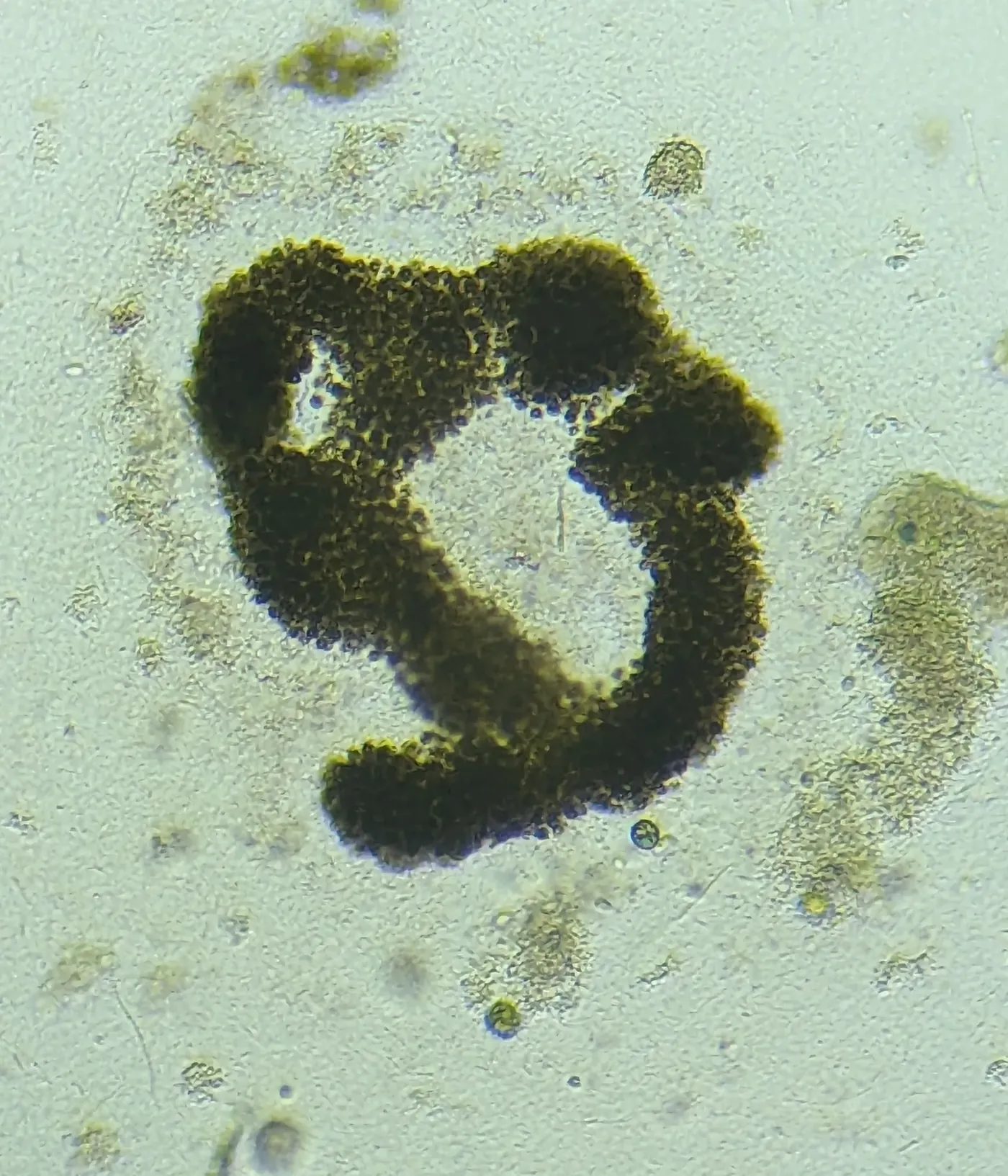
Two populations that look alike under a microscope can differ in whether they produce toxins. Microscopy identifies organisms, a gene test identifies genetic potential, and chemical analysis measures the toxin under the method used. We combine those results around the exposure question rather than expecting a species name or pigment reading to provide all three answers.
Microcystins, cylindrospermopsin, anatoxin-a, and other toxin groups have different properties and treatment responses. The amount within cells and the amount dissolved in water can also differ. Cell damage or decomposition can increase dissolved concentrations even as the visible bloom declines.
Exposure is spatial. Wind-driven accumulations and shoreline mats can create conditions that a mid-lake sample doesn't represent. People and animals can encounter those areas directly. Reports of illness require prompt investigation and coordination with the relevant health or veterinary professionals; appearance alone can't identify the cause.
Earthy or musty odors may be associated with some cyanobacteria, but odor compounds aren't a toxin test. Similarly, water without an obvious scum may still require investigation. A clear-looking surface after treatment isn't evidence that exposure risk has ended.
Monitoring and response criteria depend on the water's use and the responsible jurisdiction. Drinking-water guidance, recreational criteria, and ecological objectives are different. Current EPA harmful-algal-bloom resources provide background, while local authorities establish the applicable response framework.
| Group | Principal toxicological concern | Management distinction |
|---|---|---|
| Microcystins | Primarily liver toxicity | Many congeners exist; cell-associated and dissolved toxin require different analytical and treatment interpretation. |
| Cylindrospermopsins | Protein-synthesis inhibition and effects on multiple organs | A substantial dissolved fraction can be important; cell removal alone is not a complete barrier. |
| Anatoxins | Neurotoxicity | Benthic mats can create an exposure route that open-water sampling misses. |
| Saxitoxins | Neurotoxicity | Toxin identity and concentration require specific evidence, not organism appearance alone. |
Toxin production varies among strains and conditions. Exposure assessment also considers location, water use and the measured toxin concentration. [3] [5]
| Toxin | Bottle-fed infants and preschool-age children | School-age children and adults |
|---|---|---|
| Microcystins | 0.3 µg/L | 1.6 µg/L |
| Cylindrospermopsin | 0.7 µg/L | 3.0 µg/L |
These 2015 values are nonregulatory federal Health Advisories for drinking water, not enforceable federal maximum contaminant levels, raw-water treatment targets or recreational thresholds. Applicable state requirements and response plans must also be considered. [6]
A shoreline mat or wind-concentrated scum may be the part of the lake people and animals actually encounter, even when an open-water sample looks unremarkable. Sampling needs to represent that exposure as well as the wider population. This is especially important after treatment, when visible biomass can decline while dissolved toxin remains. [5]
ENV can help design a risk-focused investigation, assess source and treatment options, and connect biological observations with confirmatory testing. The aim is to separate organism presence, toxin occurrence, and actual exposure so that the response addresses the evidence.
| Toxin | Concentration | Use and status |
|---|---|---|
| Microcystins | 8 µg/L | Recommended swimming-advisory value; not an enforceable nationwide recreational limit. |
| Cylindrospermopsin | 15 µg/L | Recommended swimming-advisory value; states and authorized tribes may use different frameworks. |
EPA recommends that these swimming-advisory concentrations not be exceeded on a single day. Its water-quality criteria use the same concentrations with separate duration and frequency provisions. These recreational values address incidental exposure and aren't substitutes for the drinking-water advisories above. The local authority's adopted thresholds and response procedures govern the site. [18]

Discuss an investigation suited to the exposure and local response framework →
04Reactive algaecide treatments: Pros and cons
Algaecides can provide important control of an existing nuisance population. Their speed, selectivity, and effectiveness depend on the product, target organism, water chemistry, and exposure. They can be appropriate within a broader program, including when immediate growth reduction is a legitimate objective.
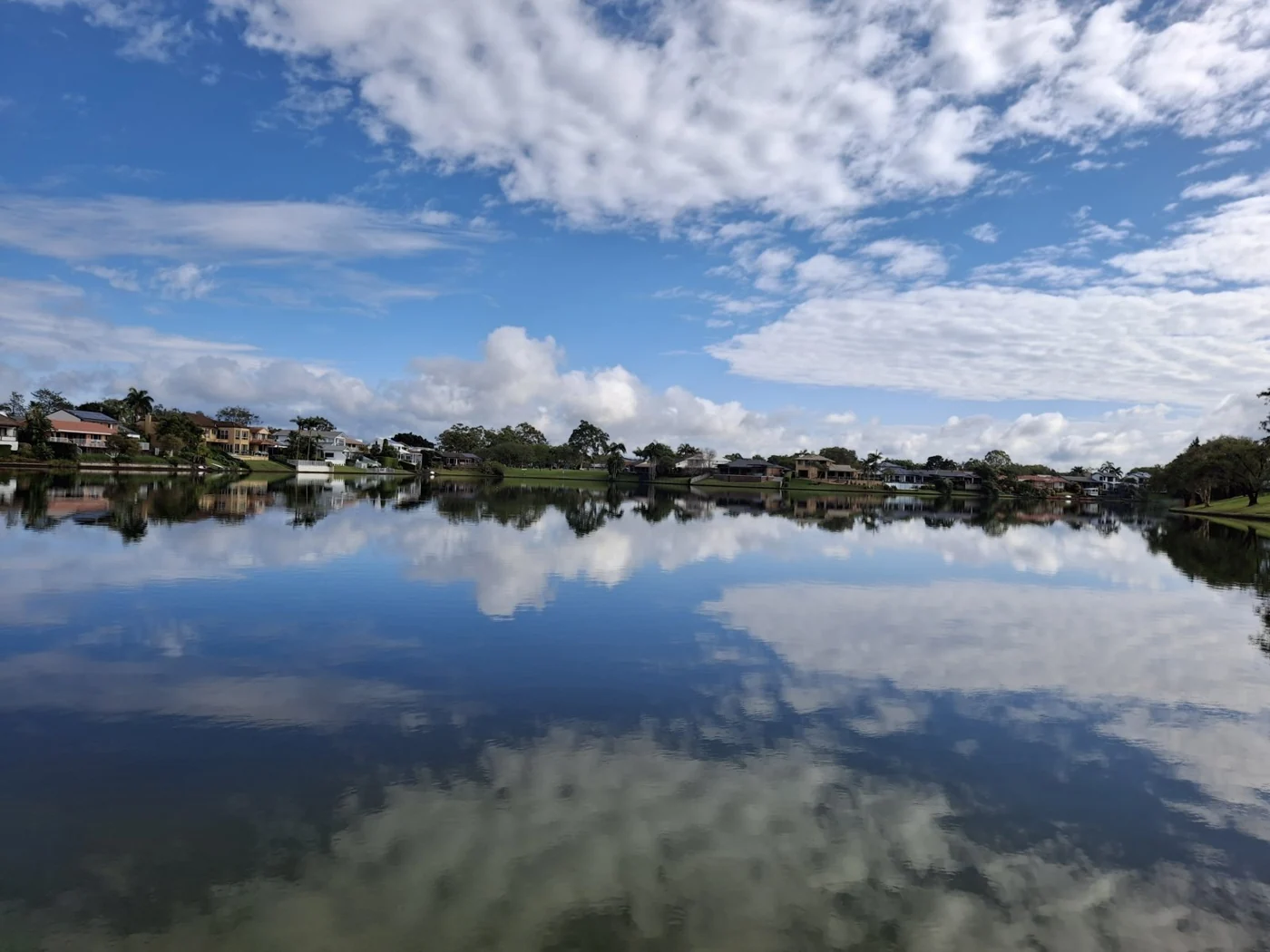
The nutrients that grew the bloom usually remain after a knockdown. As the treated biomass decomposes, phosphorus is recycled and oxygen demand increases, so the conditions supporting another bloom can remain. In ENV's planning experience, regrowth often occurs in roughly 2 – 4 weeks; temperature, species, treatment exposure, and continuing nutrient supply can make the interval shorter or longer.
Cell damage can release dissolved toxins where toxin-producing organisms are present. The outcome depends on the toxin, its initial distribution, the treatment, and degradation or removal conditions. Neither copper nor peroxide-based treatment should be assumed to destroy every toxin as it controls cells.
Copper has a long history of use, but it can accumulate in sediment. Bioavailability and effects on non-target organisms depend on water chemistry. EPA's copper Biotic Ligand Model guidance reflects the importance of dissolved organic carbon, pH, major ions, and other factors beyond hardness alone.
Peroxide often dissipates within roughly 1 – 2 days in the field ranges used in ENV's guidance, while dissolved, bioavailable copper may decline over roughly 1 – 2 weeks through reaction and partitioning. Those times describe changing exposure, not guaranteed control: copper can remain in sediment, and a population can recover after either treatment if its growth conditions persist. [7] [8]
Product labels, permits, and access or intake requirements govern application. A treatment response must be verified before using it as evidence for reopening a recreation area or changing a drinking-water response.
| Approach or consequence | Potential benefit | What remains to be managed |
|---|---|---|
| Copper-based products | Control of susceptible algae and cyanobacteria under suitable exposure conditions | Copper chemistry, non-target effects, sediment accumulation and the continuing nutrient supply |
| Peroxide-based products | Oxidative control of susceptible populations with a different persistence profile | Oxidant demand, variable species response, exposure and non-target effects |
| Rapid biomass reduction | Relief from a current nuisance or an operational problem | Decomposition demand and possible release of dissolved cell contents |
| Targeted seasonal intervention | Can protect an important use while longer-term work proceeds | Repeat applications may still be needed if growth conditions remain favorable |
Product-specific labels and permissions govern use. Neither product class guarantees a fixed number of bloom-free weeks. [7] [8] [9]
The relevant question is what the intervention is expected to accomplish now and what will be managed afterward. Reactive control can have a legitimate role within a broader program. Its performance should be assessed against the target organisms and intended use, while oxygen, toxins where relevant, and regrowth are evaluated as separate consequences. [10]
We evaluate an algaecide program in terms of what it controls, how long that benefit is needed, what happens to the biomass, and whether a remaining nutrient source can be addressed. Monitoring after treatment should reflect those questions, including oxygen and toxin concerns where relevant.
Repeated applications can also change the community by favoring organisms that survive the particular exposure or recolonize quickly. That doesn't mean every algaecide program selects for cyanobacteria; it means species observations and treatment history belong alongside the application record. We sell no chemicals and no equipment; the recommendation is the product. We can evaluate the benefit of current control while considering whether prevention would reduce how often it's needed. [7]
Review the benefits and limits of your current treatment program →
05Algae prevention with nutrient management
Nutrient prevention aims to change the conditions that keep producing the problem. More biomass settles, decomposition consumes oxygen, and oxygen loss can release additional sediment phosphorus that supports more growth. Reducing a significant phosphorus source can weaken that feedback: less new biomass reaches the bed, oxygen demand may decline, and the sediment can retain more of the next nutrient input.
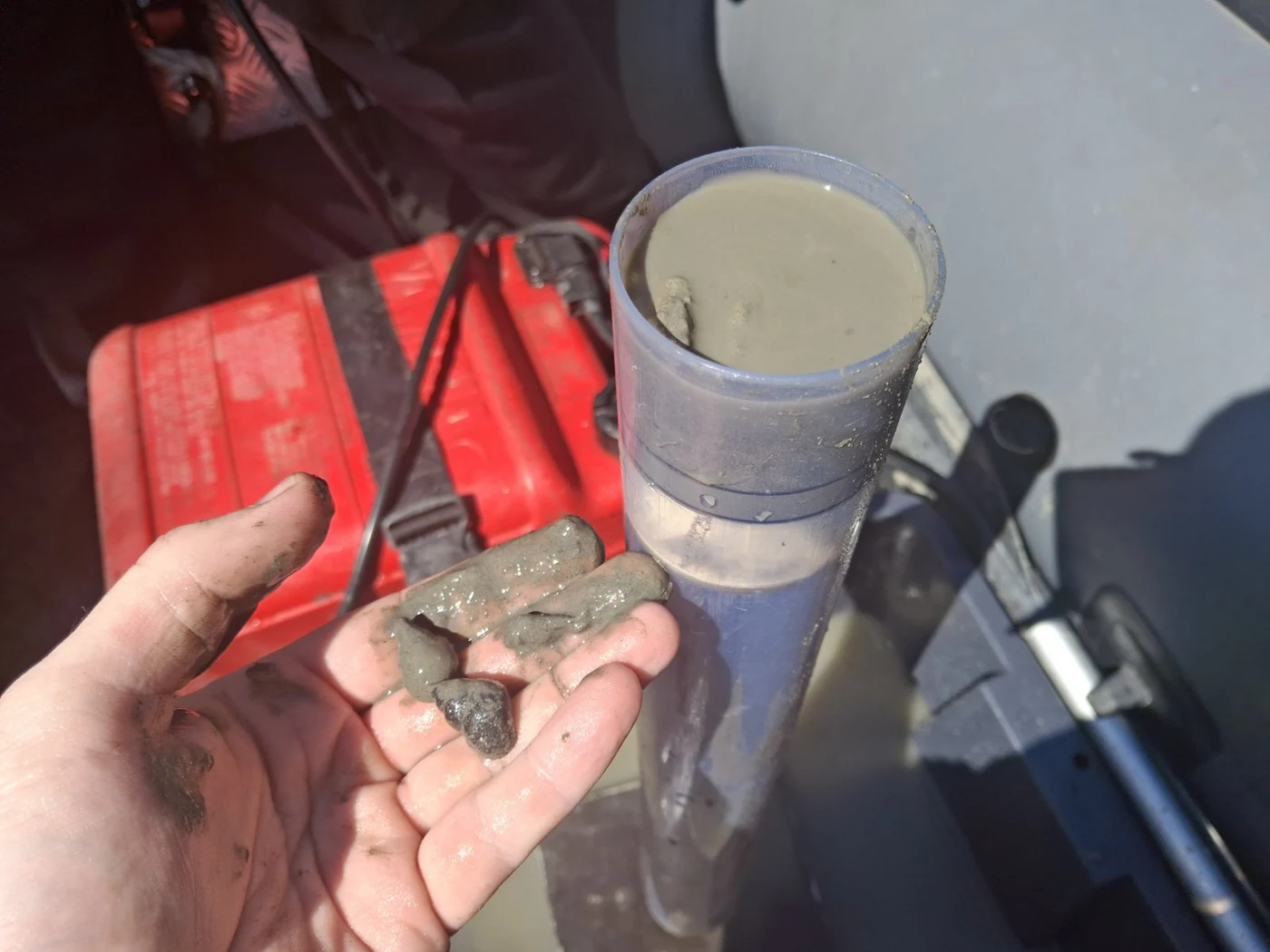
The sediment's response depends on which phosphorus pools are present. Iron-associated phosphorus can be released under reducing conditions, while decomposition, high pH, and disturbance provide other routes. Bottom-water DO around 1 – 2 mg/L is a useful warning range for investigating oxygen-related release, but an oxygenated profile doesn't exclude reducing sediment or the other mechanisms. We connect release testing with the lake's seasonal behavior before selecting a preventive treatment. [11]
Phosphorus binders add retention capacity. Aluminum-based materials form hydroxide floc that binds phosphate; lanthanum-based materials use a different chemical reaction. Their suitability depends on the phosphorus pool, water chemistry, distribution, ecological constraints, and continuing inputs. They don't directly remove every existing algal or plant population.[14]
Oxygenation can help maintain phosphorus binding by native iron where the sediment contains enough reactive iron and oxygen loss is a major release mechanism. Sulfide reactions can reduce that iron's availability. Oxygenation may still improve habitat where phosphorus control is incomplete, but those outcomes need separate evaluation.
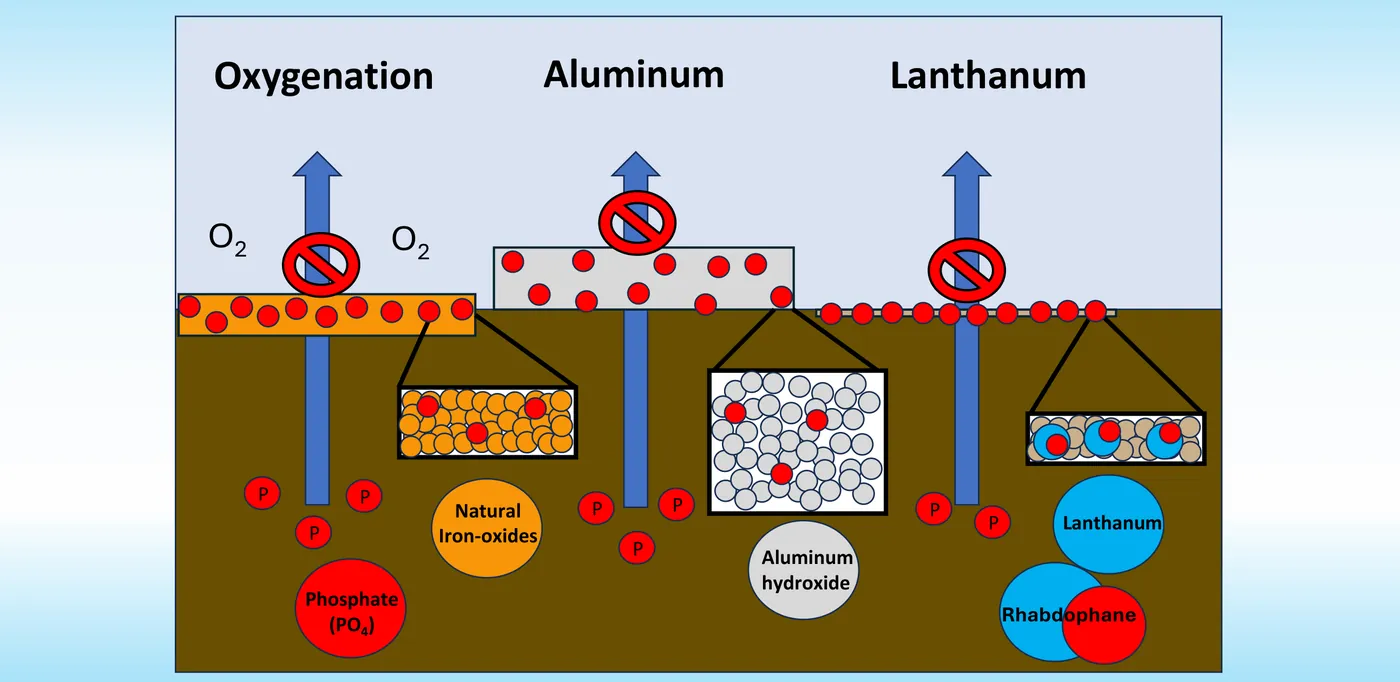
Watershed measures can reduce new loading and protect the benefit of in-lake treatment. Particle capture, dissolved-nutrient control, and groundwater management have different requirements. A measure effective for one source may have limited influence on another.
Plant harvesting exports nutrients in the removed biomass, while cutting or killing vegetation without removal leaves much of that material in the system. The amount exported and the effect on future growth depend on the species, area, timing, regrowth, and sediment interaction. Harvesting isn't automatically a substitute for source control.
| Option | Mechanism | Why the outcome varies |
|---|---|---|
| Reduce external loads | Decrease the supply arriving from the catchment or inflows. | Load form, season, controllability and legacy sediment recycling |
| Phosphorus-binding materials | Reduce phosphate availability through adsorption or mineral formation. | Sediment inventory, water chemistry, contact, capacity and new inputs |
| Oxygenation | Can support oxidized iron surfaces that retain phosphate while improving oxygen conditions. | Reactive iron, sulfide, organic deposition and whether oxygen reaches the important release areas |
| Biomass removal | Exports nutrients contained in removed material. | Species, biomass quantity, regrowth and disturbance; in-place decay retains much of the inventory |
| Combined nutrient and habitat management | Reduces growth pressure while supporting desirable vegetation and food-web functions. | Recovery can be nonlinear and depends on light, sediment stability and community response |
The biology is linked to chemistry, but phosphorus control isn't a substitute for understanding nitrogen supply, transport and the organisms present. [1] [11] [12]
The preventive objective is to place a sediment binder before the local release season, while phosphorus is still in the source being treated. Oxygenation similarly needs to operate before the seasonal oxygen deficit becomes difficult to recover. [13] [11]
We generally allow three months or more for nutrient-management assessment, treatment design, and coordination; laboratory work, access, and permits can extend that preparation. It's a reason to start a conversation before the next bloom, not a fixed regulatory lead time.
Published treatment duration gives useful context, but not a guarantee. In the 114-lake aluminum study, mean improvement lasted 21 years in deeper stratified lakes and 5.7 years in shallow polymictic lakes. Treatment scope, lake morphology and ongoing inputs help explain why a short-lived response to a small application doesn't mean that nutrient management as a whole will fail. [13]
ENV develops nutrient management around the sources and organisms present. The strategy can combine external-load reduction, sediment control, and selective biological management. The expected response is then measured through the water-quality and ecological outcomes the project is intended to improve.
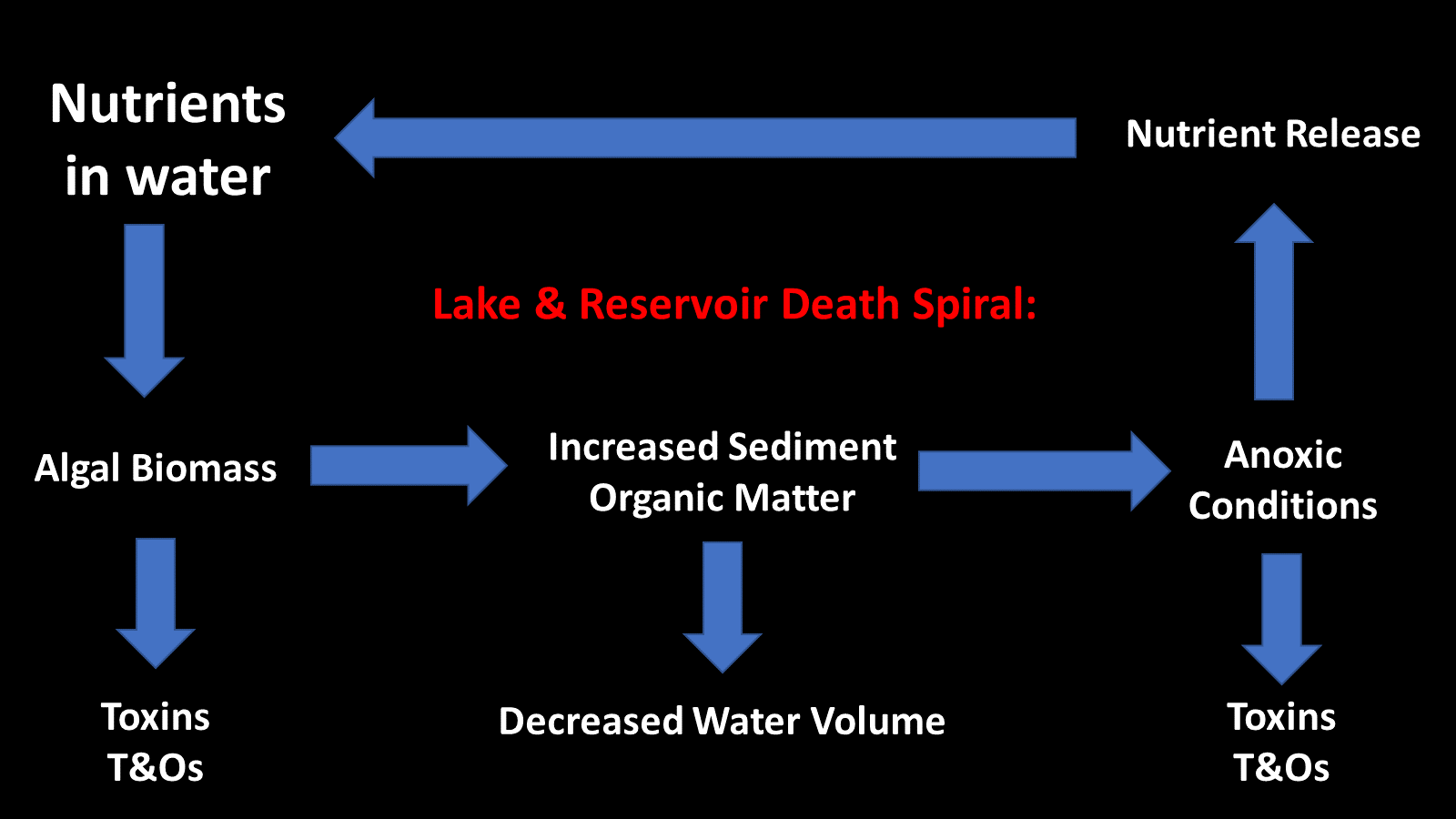
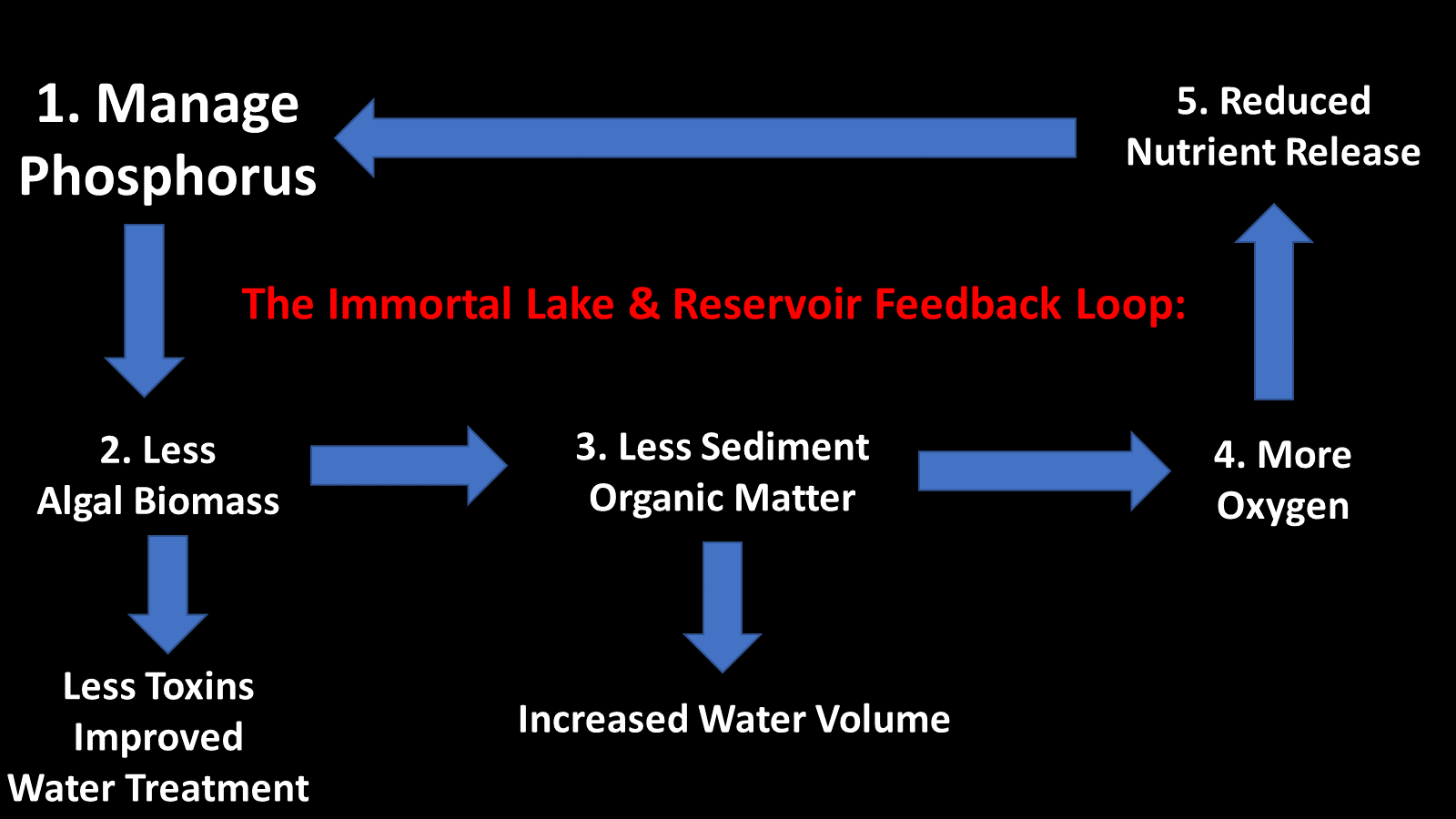
Discuss a preventive strategy before the next growth season →
06Aquatic plants: The good, the bad, and the ugly
Aquatic plants can stabilize sediment, reduce wave disturbance, provide habitat, and take up nutrients. A diverse native plant community can support lake function. Dense or invasive growth can also restrict access, interfere with infrastructure, shade other plants, and alter circulation.

Location and species matter. Vegetation that's beneficial along an unused margin may obstruct a boat route or intake. A canopy-forming invasive species can behave differently from a low-growing native bed. Plant biomass alone doesn't measure habitat value or management need.
A dense bed can produce high oxygen during daylight and strong oxygen loss overnight, then add a larger demand when it dies back. In reducing, organic-rich sediment, sulfide can injure roots and alter which plants can persist. The response depends on species tolerance and root-zone conditions, which helps explain why restoring desirable plants may require more than opening space in the canopy. [12] [19]
Harvesting removes biomass immediately, while a suitable systemic herbicide acts through the plant and can address growth beyond the harvested canopy. They can complement each other, but timing affects uptake and regrowth, and some species spread readily from fragments. We choose the combination around the identified plant, access needs, and habitat worth retaining rather than assuming removal and chemical control are substitutes.
Benthic barriers can suppress growth in a defined area by changing light and the sediment interface. They require maintenance and affect habitat beneath them. Dye can reduce light where the target growth is sufficiently light-limited, but flushing, depth, water color, and desirable vegetation constrain its use.
Restoring native vegetation or adjusting fish management can help in suitable systems. Such measures should account for local ecology, permitted species, and unintended effects. Filter-feeding organisms and other biological controls redistribute nutrients as well as consume material; they don't make nutrients disappear.
| Function or condition | Potential benefit | Potential problem |
|---|---|---|
| Rooted submerged vegetation | Stabilizes sediment and provides habitat. | Dense or invasive growth can restrict use and displace other vegetation. |
| Nutrient uptake | Stores nutrients in living biomass. | Nutrients can return to circulation when material decomposes. |
| Photosynthesis and respiration | Produces oxygen in sufficient light. | Night respiration and decay can lower oxygen within dense beds. |
| Physical structure | Provides shelter and supports invertebrates and food-web interactions. | Restricted circulation and shading can create localized poor conditions. |
| Harvesting or removal | Can export biomass and improve access. | Disturbance, fragments, regrowth and loss of habitat need consideration. |
Plant identity, density, location and season determine whether these functions support the lake-management objective. [12]
Many rooted aquatic plants can obtain substantial nutrients from sediment. Reducing water-column phosphorus may therefore improve algal conditions without eliminating an established plant bed. At the same time, clearing an extensive bed can expose sediment to disturbance and change the conditions that supported clearer water. That's one reason plant management and algae management should be evaluated together. [12] [15]
Plant tissue commonly carries roughly 0.3 – 0.5% phosphorus by dry weight, sometimes approaching 1%, so removing biomass can export a meaningful nutrient mass. Cutting or killing it in place leaves most of that material available for decomposition, oxygen demand, and recycling. Plant tissue decomposes more slowly than algae and releases a smaller share of its phosphorus; more of it remains in the sediment as residual phosphorus, which builds up over years in plant-dominated areas. The amount actually exported depends on harvested dry biomass, species, and collection efficiency, which we compare with other nutrient sources before describing harvest as lake-wide phosphorus control.
We develop plant strategies around access, habitat, species, nutrient cycling, and the likely response after treatment. Selective management can improve use while retaining vegetation that contributes to a healthier lake.
Discuss plant identification, access, habitat, and biomass removal →
07Smell, scum, and foam
Where and when a shoreline problem appears can narrow the investigation. Material that arrives after a wind shift suggests transport and accumulation; recurring odor from a sheltered cove raises different questions from odor after a storm inflow or seasonal mixing. Photographs and observations are useful starting points because they preserve that setting even when the material has dispersed before a site visit.
Earthy or musty odors can involve geosmin or MIB from particular microorganisms. Decomposing vegetation can produce other odors. Sulfide associated with reducing conditions can contribute a rotten-egg smell when affected water or sediment is disturbed or mixed. The appropriate investigation depends on the setting and the timing of the complaint.
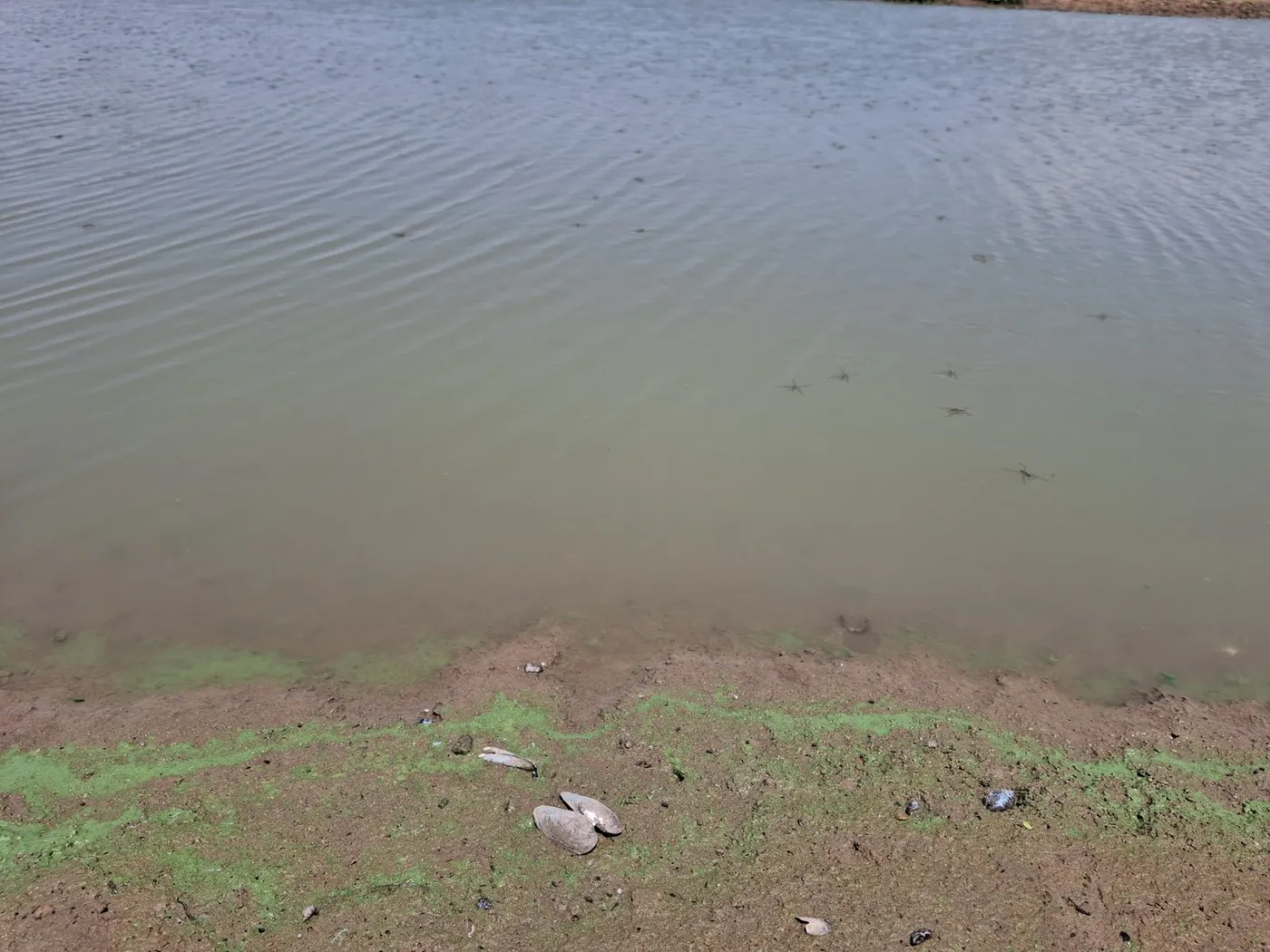
Foam can form when naturally occurring surface-active organic compounds are agitated. Wastewater or other contaminant inputs can also produce foam. Color, persistence, location, recent weather, inflows, and accompanying measurements help distinguish possibilities, but a photograph alone can't establish the source or safety.
Benthic mats deserve attention where material repeatedly detaches from shallow surfaces or accumulates along the edge. Some mats contain potentially toxin-producing organisms; many visible accumulations have other explanations. Identification and appropriate testing are more informative than assigning a species from color.
ENV investigates these problems using the pattern of occurrence, shoreline and inflow observations, water chemistry, and biological or targeted chemical analyses. The aim is to distinguish a local accumulation needing management from a broader nutrient, oxygen, or contaminant problem.
| Observation | Possible contributors | What appearance cannot establish |
|---|---|---|
| Earthy or musty odor | Geosmin or MIB from certain microorganisms | Which organism produced it, where it originated or whether cyanotoxins are present |
| Rotten-egg odor | Sulfide associated with reducing conditions and organic decomposition | The size, duration or location of the underlying oxygen problem |
| Surface scum or mats | Buoyant cyanobacteria, filamentous algae, pollen or other accumulated material | Species identity or toxicity |
| Foam | Natural organic surfactants concentrated by turbulence, or other surfactant sources | Whether the material is harmless, pollution-related or linked to a bloom |
Distribution, persistence, water movement and targeted analysis distinguish the causes. Aesthetic observations are valuable field evidence, but aren't compound identification. [16] [3]
A shoreline accumulation can change quickly as the wind shifts even when the lake-wide population changes little. Recording where and when the material appears is therefore useful alongside identification. For persistent odors, the relevant source may be attached growth, decomposing material or deeper water rather than the most conspicuous surface feature.
08Proactive cyanobacteria, algae, and aquatic plant management
A proactive program uses the lake's recurring pattern to prepare a response before access, habitat, or source-water quality is affected. We connect the species present with seasonal nutrients, oxygen, mixing, and the results of earlier treatments. That gives each intervention a role: reducing a source, protecting useful habitat, managing a developing population, or responding to an event already underway.
Plant management can combine methods without treating them as interchangeable. Harvesting may remove obstructing biomass, while a systemic herbicide can address a susceptible rooted plant, but harvesting too soon can interrupt the exposure the herbicide needs. Fragment-producing species also need attention to collection and spread. The sequence follows the plant's biology and the objective for that area of the lake.
The program should distinguish a trigger for closer investigation from a trigger for intervention. Pigment changes, weather, nutrient availability, or oxygen trends can indicate changing conditions without identifying a toxin event or proving that a specific treatment is needed.
Response options need to reflect permits, staff capacity, product availability, ecological constraints, and the time required to act. A forecast is useful when the program can respond within its warning period. A warning that arrives after the practical decision window needs a different role.
Verification then evaluates both the immediate result and the underlying source. Fewer nuisance events, improved access, adequate oxygen, reduced nutrient availability, and a suitable biological community are related but distinct measures. Weather and hydrology need to be considered when comparing seasons.
A seasonal strategy connects prevention with response
A proactive program identifies the recurring problem, the conditions that precede it, and the management options that can change those conditions. It also defines how an emerging event will be confirmed and handled. Preventive nutrient or habitat work and reactive control can each have a purpose; the strategy connects them so that an immediate intervention doesn't become the entire program by default. [17] [3]
The review after a season should distinguish growth from accumulation, nutrient supply from concentration after uptake, and treatment response from weather. Useful outcomes include fewer or less severe blooms, reduced toxin exposure, more usable shoreline, desirable vegetation and adequate habitat. A lower chlorophyll value alone doesn't describe all of those benefits.
ENV can identify the dominant biological and chemical processes, compare preventive options and develop the response and monitoring needed for your lake. The aim is a program that explains why the problem recurs and gives each intervention a specific job, with enough evidence to improve the next season's decisions.
Dye is useful only where reducing light reaches the target growth without unacceptable effects on desired vegetation; depth, water color, and flushing determine that opportunity. Filter feeders change grazing and nutrient distribution, but their waste and deposited material still enter the lake's budget. We assess those measures as parts of the ecosystem, alongside nutrient control and selective vegetation management.
Case studyProactive phosphorus control at an urban swimming lake
A Northern California urban swimming lake experienced recurring late-summer cyanobacteria and closures. Earlier phosphorus-binder applications had provided only short-term control.
The revised approach used sediment phosphorus diagnostics to characterize the mobile pool. A combined phosphorus-binder treatment was applied before bloom onset, with attention to shallow areas showing higher release potential.
The project reported fewer and less intense blooms and a move toward planned seasonal management that supported continued swimming access. The supplied ENV case is qualitative and anonymized. Its value here is the connection between the diagnosed sediment source, pre-bloom timing, and the biological outcome that mattered to the lake.
The useful connection is between the biological outcome and the nutrient source. The program addressed phosphorus supporting recurring growth while retaining monitoring of the conditions that determine whether that improvement continues.
Discuss how nutrient control could support your lake’s use →
References & resources
Research and technical guidance supporting this guide. Advisory and regulatory information checked September 2026; local requirements may differ.
- Paerl & Otten (2013). Harmful cyanobacterial blooms: Causes, consequences, and controls. ↩
- Nürnberg (2009). Assessing internal phosphorus load: Problems to be solved. ↩
- Chorus & Welker, editors (2021). Toxic Cyanobacteria in Water, 2nd edition. ↩
- Guildford & Hecky (2000). Total nitrogen, total phosphorus, and nutrient limitation in lakes and oceans: Is there a common relationship?. ↩
- Quiblier et al. (2013). A review of current knowledge on toxic benthic freshwater cyanobacteria: Ecology, toxin production and risk management. ↩
- U.S. EPA (2015). Additional Information about Cyanotoxins in Drinking Water: 2015 Health Advisories. ↩
- Jančula & Maršálek (2011). Critical review of actually available chemical compounds for prevention and management of cyanobacterial blooms. ↩
- U.S. EPA (current guidance). Copper Biotic Ligand Model. ↩
- California State Water Resources Control Board (current permit information). Aquatic Pesticides: Weed Control. ↩
- U.S. EPA (current guidance). Summary of Cyanotoxins Treatment in Drinking Water. ↩
- Hupfer & Lewandowski (2008). Oxygen controls the phosphorus release from lake sediments: a long-lasting paradigm in limnology. ↩
- Carpenter & Lodge (1986). Effects of submersed macrophytes on ecosystem processes. ↩
- Huser et al. (2016). Longevity and effectiveness of aluminum addition to reduce sediment phosphorus release and restore lake water quality. ↩
- Spears et al. (2016). A meta-analysis of water quality and aquatic macrophyte responses in 18 lakes treated with lanthanum modified bentonite (Phoslock®). ↩
- Scheffer et al. (1993). Alternative equilibria in shallow lakes. ↩
- Jüttner & Watson (2007). Biochemical and ecological control of geosmin and 2-methylisoborneol in source waters. ↩
- Williams, Szaro & Shapiro (2009 printing). Adaptive Management: The U.S. Department of the Interior Technical Guide. ↩
- U.S. EPA (2019). Recommended Human Health Recreational Ambient Water Quality Criteria or Swimming Advisories for Microcystins and Cylindrospermopsin. ↩
- Lamers et al. (2013). Sulfide as a soil phytotoxin: a review. ↩
Let's talk about your algae and aquatic plant problems
We can identify the conditions supporting recurring algae or plant problems and develop a strategy that connects nutrient control, biological management, and monitoring.
A conversation can start with what you've observed. Bloom photographs, treatment dates, and observations of weather or plant growth can help us investigate the pattern and discuss prevention options.
Schedule a conversation